Bangladesh remittances and how crypto is changing money flows
When someone in the Middle East or Europe sends money home to Bangladesh, it’s not just a transaction—it’s food on the table, school fees, a new roof. Bangladesh remittances, the flow of money sent by overseas workers to their families back home. Also known as overseas worker remittances, this system supports nearly 10% of Bangladesh’s entire economy—over $20 billion every year. But here’s the problem: most of that money still moves through old-school channels like Western Union or MoneyGram, where fees eat up 5-7% of every transfer. That’s $1 billion lost to middlemen annually. For families living paycheck to paycheck, that’s not just a cost—it’s a tax on survival.
Crypto remittances, using digital currencies like Bitcoin or stablecoins to send money across borders. Also known as blockchain-based money transfers, are cutting through that noise. A worker in Saudi Arabia can send $100 in USDT via a simple app, and their sister in Dhaka gets it in minutes, with fees under 1%. No bank holidays. No paperwork. No hidden charges. This isn’t theory—it’s happening right now. Platforms like BitPesa, RippleNet, and local crypto wallets are already serving thousands in Bangladesh, especially among the young and mobile-first generation who don’t trust traditional banks but trust their phones. And it’s not just about speed. Stablecoins pegged to the U.S. dollar protect recipients from taka volatility. Parents aren’t watching their child’s school fund shrink because the currency dropped overnight.
But crypto remittances aren’t magic. They need internet, basic tech literacy, and access to local crypto exchanges or agents who can cash out. That’s why the real winners aren’t just the apps—they’re the local shops in Sylhet or Chittagong that now double as crypto cash-in/cash-out points. These small businesses are becoming the new post offices of global finance. Meanwhile, regulators are watching. Bangladesh’s central bank still bans crypto trading, but enforcement is patchy, and the demand is too strong to ignore. People aren’t waiting for permission—they’re building their own systems.
What you’ll find below are real stories, tools, and platforms that are making a difference. Not hype. Not speculation. Just people using crypto to get money where it matters most—home.
Remittances and Crypto Use in Bangladesh: Why Digital Currencies Are Still Banned
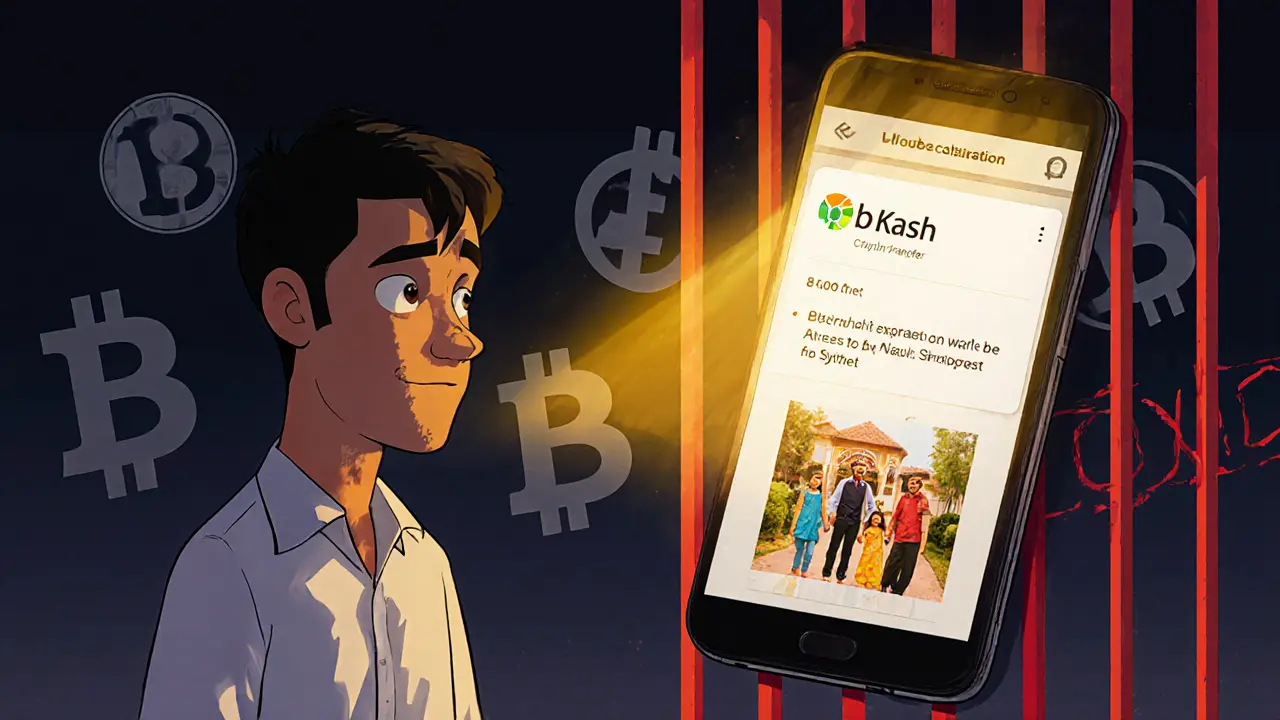
Bangladesh hit a record $30 billion in remittances in 2025, but crypto remains banned. Learn why the central bank blocks digital currencies despite high fees and slow transfers in formal channels.
- January 30 2025
- Terri DeLange
- 16 Comments