Blockchain Consensus: How Networks Agree on Truth Without Central Control
At the heart of every blockchain is blockchain consensus, the system that lets distributed computers agree on a single version of truth without a central authority. This is what makes Bitcoin and Ethereum possible—no bank, no government, just code and math holding everything together. Without consensus, anyone could cheat, double-spend coins, or rewrite history. But with it, thousands of machines spread across the world can trust each other just by following the same rules.
There are two main ways this happens: proof of work, the original method used by Bitcoin where miners compete to solve hard math puzzles, and proof of stake, the newer approach where validators are chosen based on how much crypto they lock up. Proof of work needs tons of electricity because it’s a race to solve the next block. Proof of stake is quieter—it’s more like a lottery where your odds depend on how much you have at stake. Ethereum switched to proof of stake in 2022 to cut energy use by over 99%. Other chains like Solana and Cardano use variations of it too.
These systems don’t just prevent fraud—they create incentives. Miners get rewarded with new coins for securing proof of work chains. Validators earn transaction fees and new tokens in proof of stake networks. That’s why people run nodes: not because they believe in decentralization alone, but because they get paid to keep it running. And that’s what keeps the network alive—even when no one’s watching.
But consensus isn’t perfect. Proof of work is slow and energy-heavy. Proof of stake can be dominated by big holders. Some chains use hybrid models, others tweak the rules to balance speed, security, and decentralization. You’ll see this play out in posts about ZK-rollups, which rely on consensus to validate off-chain transactions, or in airdrop events like QBT and BAKE, where token distribution depends on how users interact with the underlying consensus layer.
What you’ll find below aren’t just articles about crypto prices or airdrops—they’re real-world examples of how consensus shapes everything. From Bitcoin’s mining difficulty to Ethereum’s fee burns, from Binance Smart Chain rewards to the security of decentralized exchanges like Shadow Exchange v2—every one of these relies on the same basic idea: trust without a middleman. And if you understand how that works, you’ll know which projects are built to last, and which are just noise.
Instant Finality in Blockchain Systems: What It Is and Why It Matters

Instant finality in blockchain means transactions are permanently settled in milliseconds, not minutes. It's revolutionizing DeFi, trading, and enterprise use by eliminating waiting periods-here's how it works and why it matters.
- January 4 2026
- Terri DeLange
- 10 Comments
How Many Faulty Nodes Can BFT Systems Tolerate? The Math Behind Blockchain Consensus
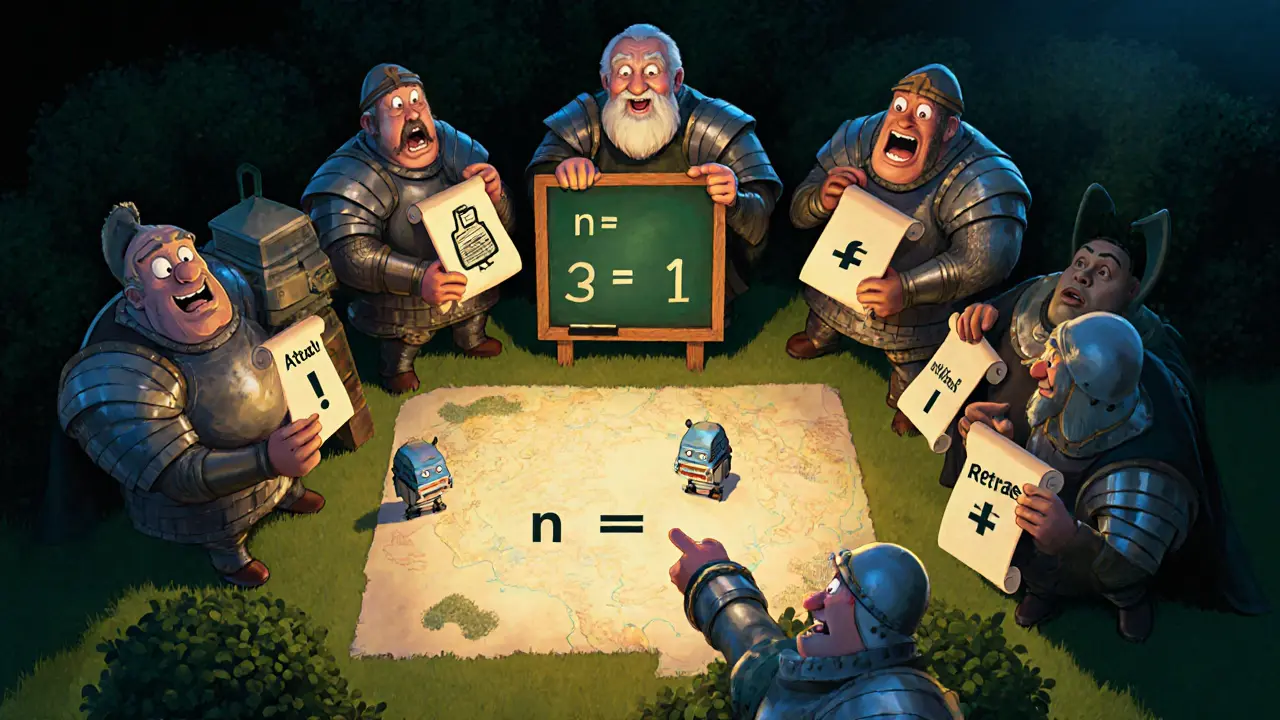
BFT systems can tolerate up to one-third of nodes being faulty, governed by the formula n ≥ 3f + 1. Learn how many nodes you need to handle 1, 2, or 3 faults - and why running the minimum is often a dangerous mistake.
- October 20 2025
- Terri DeLange
- 10 Comments