Blockchain Transaction Analysis: How to Track, Trace, and Understand Crypto Flows
When you send Bitcoin or Ethereum, that transaction doesn’t just disappear into thin air—it leaves a permanent, public trail. This is where blockchain transaction analysis, the process of examining on-chain data to uncover patterns, origins, and destinations of crypto movements. Also known as blockchain forensics, it’s not just for cops and regulators—it’s a tool anyone can use to spot scams, avoid fake airdrops, and understand why your favorite token crashed. Every transaction gets recorded on a public ledger, tied to wallet addresses, and linked to other transactions. You don’t need to know the person’s name, but you can see exactly where their coins came from and where they went next.
That’s why whale alerts, real-time notifications of massive crypto movements that often signal market shifts matter. When a single wallet moves $50 million in ETH, analysts use blockchain transaction analysis to trace if it’s going to an exchange, a DeFi protocol, or another suspicious address. The same technique exposed fake exchanges like Certified Coins and Wavelength—both had no real infrastructure, but their wallet histories showed they were just recycling funds from known scam addresses. Meanwhile, regulators use this to enforce international tax reporting, global standards like CRS and FATCA that force financial institutions to share crypto activity across borders. If you moved crypto from India to Dubai to dodge taxes, blockchain analysis can still trace that path—even if you used a VPN.
It’s not all about catching bad actors. Blockchain transaction analysis also helps you find real opportunities. The QBT airdrop from BSC MVB III wasn’t random—it rewarded users who had actively used the Binance Smart Chain. Analysts tracked wallet behavior: frequency of swaps, gas fees paid, interactions with DeFi protocols. That’s how they determined who qualified. Same with the HUSL NFT airdrop on MEXC—only users who voted with MX tokens got tokens. No guessing. Just data. Even something as simple as checking if a token like real fast (SPEED) has $0 trading volume or if Grok Girl’s 420 quadrillion tokens are stuck in dead wallets? That’s blockchain transaction analysis in action.
And it’s not magic. Tools like Etherscan, Blockchain.com, and Nansen don’t guess—they follow the trail. Every signature, every transfer, every smart contract interaction adds up. If you’re trying to avoid scams, understand market moves, or just want to know why your coin lost value, you’re already using blockchain transaction analysis. You just might not realize it yet. Below, you’ll find real cases where this technique exposed fraud, revealed hidden value, and helped people make smarter moves in crypto—no degree required.
On-Chain Crypto Transaction Tracing Techniques: How Funds Are Tracked on Blockchain
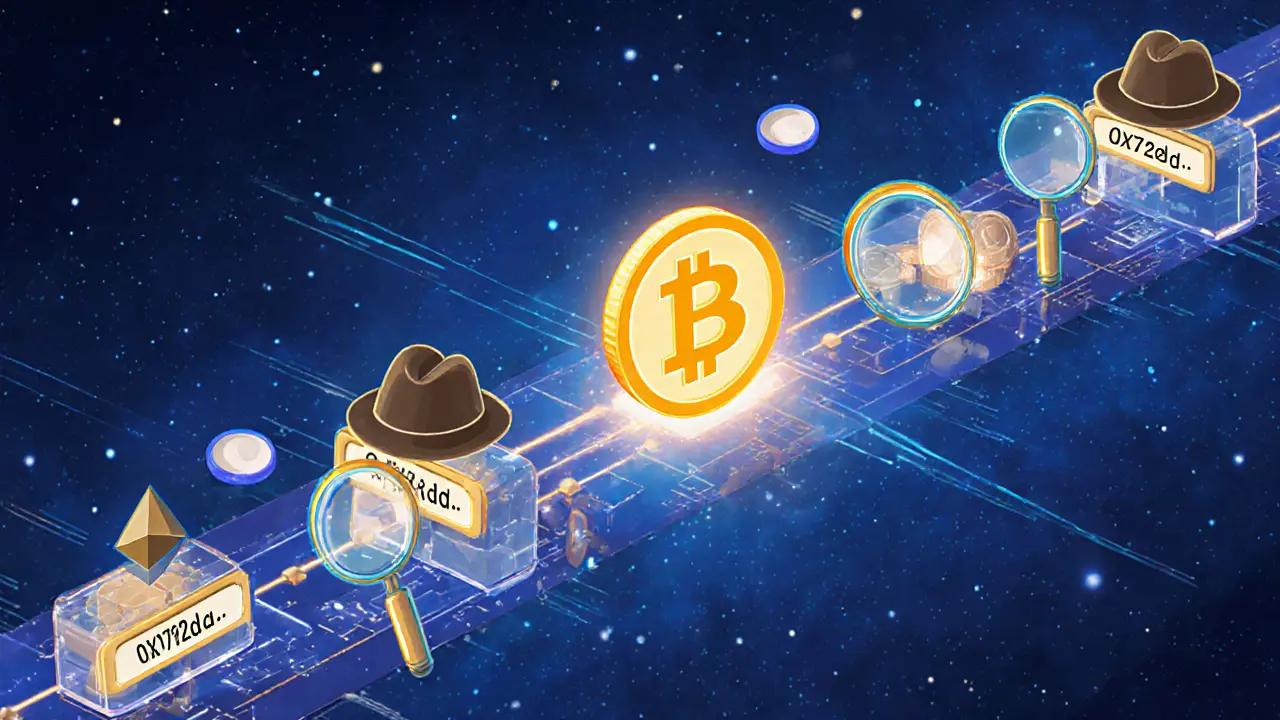
On-chain crypto transaction tracing uses blockchain transparency to track funds, cluster wallets, and detect illicit activity. Learn how techniques like address clustering and graph learning work-and where they fail.
- November 25 2025
- Terri DeLange
- 17 Comments