Crypto Ban in Bangladesh: What It Means for Users and How to Stay Safe
When the crypto ban in Bangladesh, a government prohibition on using cryptocurrencies like Bitcoin and Ethereum for transactions. Also known as digital currency restrictions, it was enforced by the Bangladesh Bank in 2015 and reinforced in 2021 to prevent money laundering and protect the national currency. The ban doesn’t stop people from holding crypto—it just makes trading, exchanging, or using it for payments illegal under local law. That means banks won’t process crypto-related transfers, exchanges can’t operate openly, and users risk fines or legal trouble if caught.
This ban connects directly to other global rules like MiCA regulation, the EU’s unified framework for crypto service providers and international tax reporting standards, like CRS and FATCA that force financial institutions to share crypto transaction data across borders. While the EU is building legal pathways for crypto, Bangladesh chose to shut them down entirely. The result? Users turn to peer-to-peer platforms, offshore exchanges, or informal networks to buy and sell. Some use UPI-like systems disguised as gift cards or remittance services. Others rely on decentralized exchanges that don’t require KYC—like those mentioned in guides for Indian users, where similar gray-area trading happens.
What’s missing in Bangladesh’s approach is clarity. There’s no official guidance on what counts as a violation. Is holding Bitcoin illegal? What about receiving crypto as payment for freelance work? Can you use a VPN to access Binance? The answers are murky. That’s why scams thrive—fake exchanges promise to bypass the ban, then disappear with your funds. Real users are left confused, vulnerable, and often punished for trying to use a global financial tool.
The posts below cover what’s really happening on the ground: how people in restricted countries navigate crypto, which exchanges still work (even if unofficially), and how to avoid getting trapped by fake airdrops or unregulated platforms like BiKing or Wavelength. You’ll find real stories about users in India and Turkey facing similar restrictions, and how they’ve adapted. No fluff. No hype. Just what works—and what gets you in trouble.
Remittances and Crypto Use in Bangladesh: Why Digital Currencies Are Still Banned
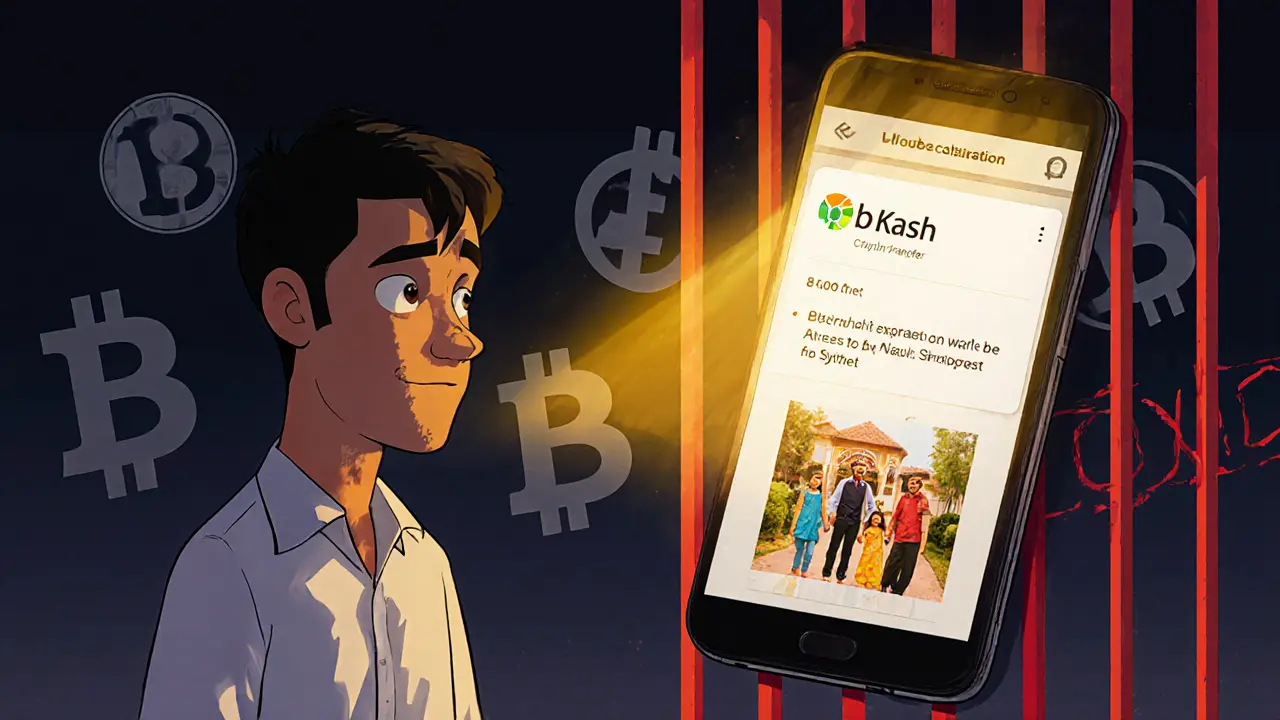
Bangladesh hit a record $30 billion in remittances in 2025, but crypto remains banned. Learn why the central bank blocks digital currencies despite high fees and slow transfers in formal channels.
- January 30 2025
- Terri DeLange
- 16 Comments