Crypto Transaction Fees: What They Are, Why They Matter, and How to Beat Them
When you send Bitcoin, swap tokens on Uniswap, or stake ETH, you pay a crypto transaction fee, a payment made to network validators or miners to process and confirm your transaction. This isn’t a bank charge—it’s a market-driven cost tied to demand, network capacity, and how busy the blockchain is. Right now, Ethereum’s fees can spike to $20 or more during peak times, making small trades pointless. But not all blockchains work this way. Some, like those using ZK-rollups, a Layer 2 scaling solution that bundles hundreds of transactions into one secure proof, cut fees to pennies. Others, like the Sonic blockchain, a high-speed network designed for low-cost trading and yield farming, were built from the ground up to avoid Ethereum’s congestion problems.
Why do these fees even exist? They’re the incentive that keeps blockchains secure. Miners and validators get paid to verify your transaction, prevent double-spending, and maintain the ledger. When too many people try to send transactions at once, fees rise like auction bids. That’s why ZK-rollups matter—they don’t just lower costs, they make crypto usable for everyday people. Without them, small DeFi swaps, NFT mints, or even sending $5 in stablecoins become too expensive. You’ll see this in posts about crypto transaction fees—how they’ve dropped on zkSync, why QBT airdrop participants had to time their claims, and how Shadow Exchange v2 slashed fees by 95% compared to Ethereum. It’s not magic. It’s architecture.
Some chains, like Binance Smart Chain, lowered fees by sacrificing decentralization. Others, like Ethereum, are fixing it through upgrades. The result? A split in the market: one side still struggles with high fees, the other is moving fast and cheap. If you’re trading, staking, or just holding, ignoring fees means leaving money on the table. The posts below cover real cases—how users avoided fee traps during the QBT airdrop, why ZK-rollups became the default for DeFi, and how new chains like Sonic are changing the game. You’ll learn what actually works, what’s just hype, and how to pick the right network so your next transaction doesn’t cost more than the asset you’re buying.
What Are Gas Fees in Cryptocurrency? A Simple Guide to Blockchain Transaction Costs
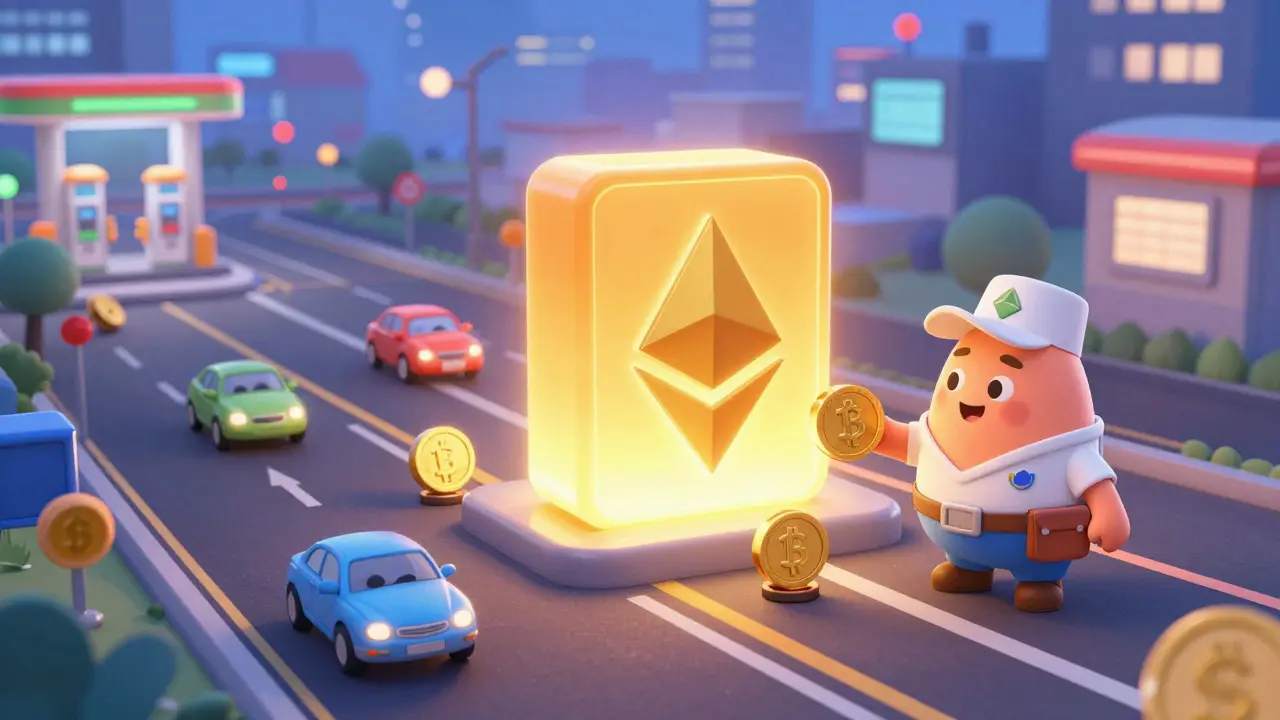
Gas fees are transaction costs on blockchains like Ethereum that pay validators to process your crypto transactions. Learn how they work, why they spike, and how to save money.
- December 11 2025
- Terri DeLange
- 18 Comments
Factors Affecting Crypto Transaction Fees in 2025

Understand why crypto transaction fees vary so much in 2025-from Bitcoin's byte-based pricing to Ethereum's gas system and fee-less networks like IOTA. Learn how to save money with timing, network choice, and smart strategies.
- February 9 2025
- Terri DeLange
- 0 Comments