Cryptocurrency Regulations: What You Need to Know in 2025
When you trade crypto, use an exchange, or even get an airdrop, you’re already inside cryptocurrency regulations, the legal rules that govern how digital assets are issued, traded, and taxed across borders. Also known as crypto compliance frameworks, these rules aren’t optional—they’re the invisible hand shaping which exchanges you can use, where you can earn tokens, and whether your gains are legal or risky. In 2025, this isn’t just about governments watching you—it’s about whether your favorite platform even still exists.
Take the MiCA regulation, the European Union’s first unified crypto law that forces all crypto providers to get licensed to operate across all 27 member states. Also known as Markets in Crypto-Assets regulation, it means a platform like Shadow Exchange v2 can’t just launch in Germany and ignore France—they need one license for the whole bloc. This is why you see fewer shady exchanges in Europe now, and why platforms like BiKing and Wavelength are disappearing—they never filed. Meanwhile, countries like India are building their own systems. You can buy crypto with UPI there, but you’re also reporting those trades to the tax authorities. That’s where international tax reporting, the global system that forces banks and exchanges to share your financial data with tax agencies. Also known as CRS and FATCA, it’s why you can’t hide crypto earnings in offshore wallets anymore. If you got a QBT airdrop in 2021 or earned HUSL tokens on MEXC, those gains are taxable now—whether you claimed them or not.
It’s not just about where you trade. It’s about what you’re trading. Meme coins like Grok Girl or real fast (SPEED) aren’t just worthless—they’re often flagged as high-risk assets under new EU and UK guidelines. And if you’re using a DeFi protocol like Aave or Uniswap, you’re still subject to the same rules: you own the assets, you pay the taxes, and you’re responsible for tracking it all. No more blaming the smart contract.
What you’ll find below isn’t a list of laws. It’s a collection of real stories—how MiCA forced exchanges to change, how Indian users navigate UPI without getting taxed wrong, why airdrops like MPAD or BAKE require you to know the rules before you claim, and how crypto tax systems are now linked to global databases you can’t escape. These aren’t theoretical debates. They’re the practical filters that separate safe opportunities from traps. Read on to make sure you’re not the one getting caught.
Central Bank of Tunisia Crypto Policy: Strict Ban and Controlled Blockchain Experiments

Tunisia's Central Bank bans all cryptocurrency transactions since 2018, with prison terms for violations. Yet it quietly tests blockchain for government use through a regulated sandbox. This is crypto policy under total control.
- January 21 2026
- Terri DeLange
- 10 Comments
Global Cryptocurrency Regulations Overview: What’s Legal Where in 2025
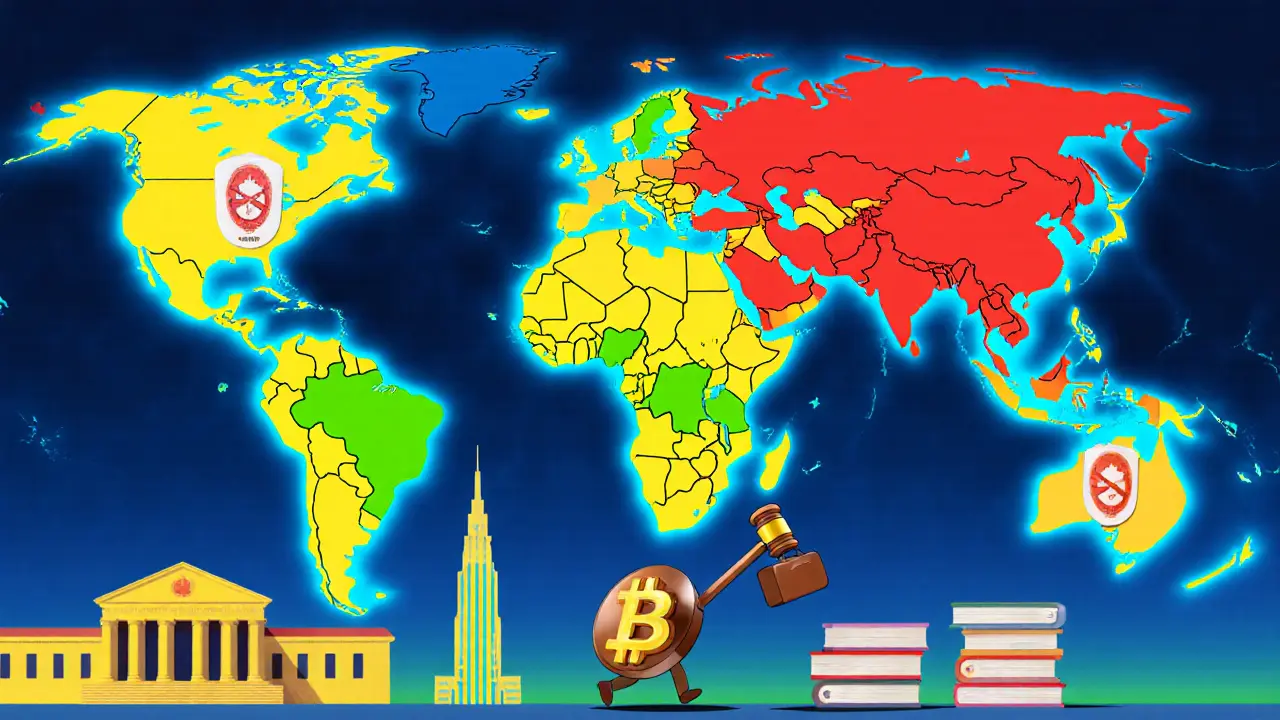
In 2025, global crypto regulations are clearer than ever-but wildly different by country. From the EU's MiCA to the U.S. GENIUS Act, learn how laws shape what you can do with Bitcoin, stablecoins, and DeFi.
- July 12 2025
- Terri DeLange
- 19 Comments