Most crypto exchanges force you to wrap your Bitcoin or Ethereum before swapping it for another coin. You give up control. You trust a middleman. You pay extra fees. But what if you could swap BTC for DOGE directly - without wrapping, without custody loss, and without a centralized exchange holding your funds? That’s the promise of THORChain (BEP20).
THORChain isn’t another DEX like Uniswap or PancakeSwap. It doesn’t just trade tokens on one chain. It moves native assets across blockchains - Bitcoin, Ethereum, BNB Chain, Litecoin, Dogecoin - all in one seamless swap. And it does it without needing wrapped tokens. That’s rare. And it’s why people are paying attention.
How THORChain Actually Works
THORChain runs on its own blockchain, built with the Cosmos SDK and Tendermint consensus. It doesn’t rely on bridges or sidechains. Instead, it uses a network of validators who lock up RUNE tokens as collateral to secure the system. When you send BTC to THORChain, the network detects the deposit, holds it in a secure vault, and then sends you the equivalent amount of another asset - say, ETH - from its own liquidity pool. You never touch the original BTC. The network does the work.
The magic is in the liquidity pools. Every pair on THORChain is paired with RUNE. So if you want to swap BTC for DOGE, you’re actually doing BTC → RUNE → DOGE. That’s why RUNE isn’t just a token - it’s the glue holding the whole system together. More swaps mean more RUNE demand. Simple.
Validators earn rewards from fees and newly minted RUNE, but there’s a twist: the Incentive Pendulum adjusts rewards dynamically. If liquidity is low, more rewards go to liquidity providers. If security is weak, more go to validators. It’s self-balancing. No human intervention needed.
Supported Assets and Chain Integrations
As of early 2026, THORChain supports native swaps for:
- Bitcoin (BTC)
- Ethereum (ETH)
- BNB (BEP20 and BEP2)
- Bitcoin Cash (BCH)
- Litecoin (LTC)
- Dogecoin (DOGE)
- RUNE (native token)
That’s it - no Solana, no Avalanche, no Cardano. But the team has signaled plans to add more chains soon. The focus is on security and stability over speed. Adding a new chain takes months of testing. THORChain’s track record for avoiding hacks since 2021 is one reason users stick with it.
One thing to note: THORChain doesn’t support ERC-20 tokens. Only native assets. So if you want to swap USDT or LINK, you’re out of luck. You need the real coin on its real chain.
Why RUNE Matters
RUNE is the heartbeat of THORChain. It does three things:
- Security: Validators must bond RUNE to join the network. If they act maliciously, their RUNE is slashed.
- Liquidity: Every pool needs RUNE as a base pair. The more RUNE in pools, the deeper the liquidity.
- Governance: RUNE holders vote on upgrades, fee changes, and new chain integrations.
As of October 2025, RUNE was trading around $1.21. That’s down from its all-time high of $20 in 2021 - a brutal drop. But here’s the thing: price doesn’t tell the whole story. Network activity has grown. Daily swaps peaked at over 100,000 in 2024. Liquidity in pools has doubled since 2022. The protocol is working - even if the token price hasn’t caught up.
Some analysts think RUNE could hit $1.50-$3.34 by late 2025. Others warn it could drop below $0.50 if adoption stalls. The truth? It’s tied to usage. More swaps = more RUNE demand. That’s the model.
No KYC, No Registration, Full Custody
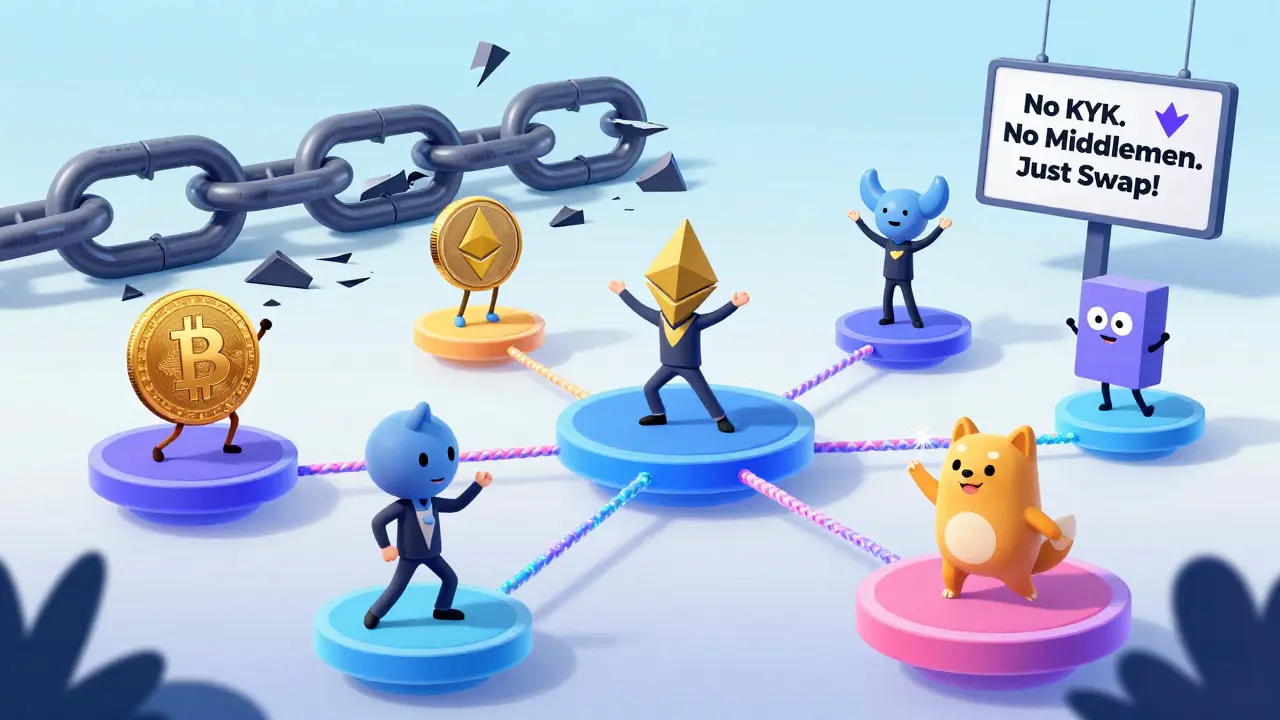
THORChain doesn’t ask for your ID. Doesn’t store your private keys. Doesn’t hold your funds. You connect your wallet - MetaMask, Keplr, Ledger - and swap. That’s it. No sign-up. No email. No verification.
This makes it attractive for privacy-focused users. But it also makes it a target. In February 2025, hackers laundered stolen ETH through THORChain using multiple small swaps to avoid detection. The community backlash was loud. THORChain responded by adding transaction monitoring tools and working with blockchain forensics firms. But it still doesn’t freeze accounts or block addresses. It’s designed that way.
That’s the trade-off: freedom vs. control. If you want total anonymity, THORChain delivers. If you want regulatory compliance, look elsewhere.
Performance and Speed
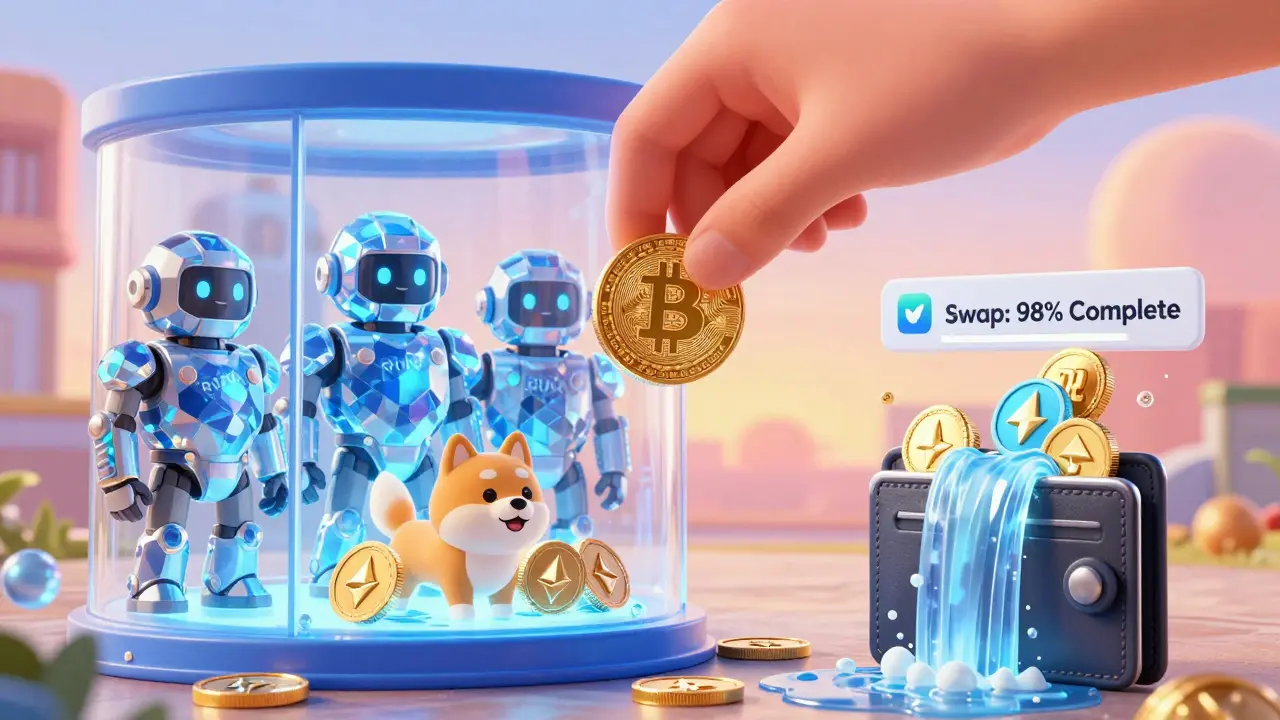
THORChain claims it can handle up to 10,000 transactions per second - and it’s proven it can hit 100,000 swaps in a single day. That’s faster than most centralized exchanges. But real-world speed depends on the source chain. A Bitcoin deposit can take 1-2 hours to confirm. Ethereum? 5-15 minutes. BNB Chain? Under a minute.
Most swaps complete in under 10 minutes. Liquidity depth matters too. Popular pairs like BTC/RUNE or ETH/RUNE are fast. Niche pairs like LTC/DOGE? Might take longer or have slippage.
Network uptime is excellent. Since the 2021 hacks, there have been no major outages. The team prioritizes stability over flashy features.
Security: Past Issues and Current State
THORChain had a rough start. In 2021, attackers exploited a flaw in the validator signing process and stole $170 million in crypto. It was one of the biggest DeFi hacks at the time.
Since then, the team rebuilt the entire security layer. They switched to Threshold Signature Schemes (TSS), which require multiple validators to sign off on any transaction. No single validator can steal funds. They also introduced a bonding mechanism that makes attacks financially suicidal - you’d lose your bonded RUNE before you could cash out.
Security audits are now routine. The protocol has been reviewed by multiple independent firms. The 2025 money laundering incident wasn’t a hack - it was misuse. THORChain doesn’t police users. That’s by design. But they’ve added tools to help regulators trace activity without breaking decentralization.
How to Use THORChain
Using THORChain is straightforward:
- Get a wallet that supports THORChain - Keplr, MetaMask (with BNB Chain), or Ledger.
- Buy some RUNE from a centralized exchange like Binance or KuCoin.
- Send your native asset (BTC, ETH, etc.) to the THORChain deposit address generated in your wallet.
- Wait for network confirmation. You’ll see your swap progress in real time.
- Receive your swapped asset in your wallet. Done.
There’s no app. No web interface you need to trust. Everything happens through your wallet. That’s the point.
Pros and Cons
Pros:
- True native swaps - no wrapped tokens
- No KYC, no registration, full custody
- High throughput - up to 10,000 TPS
- RUNE token powers security, liquidity, and governance
- Works with Bitcoin, Ethereum, BNB, DOGE, LTC, BCH
Cons:
- No support for ERC-20 tokens or stablecoins
- Slow confirmations on Bitcoin and Ethereum
- Price volatility - RUNE dropped over 90% from its peak
- Used in laundering scams - reputational risk
- No mobile app - only web-based wallet integration
Who Is THORChain For?
THORChain isn’t for beginners. If you’re new to crypto, stick with centralized exchanges. This is for people who:
- Own native BTC, ETH, or BNB and want to swap without wrapping
- Value privacy and self-custody
- Understand blockchain risks and can manage their own keys
- Are tired of paying fees on wrapped token bridges
- Believe cross-chain interoperability is the future
If you’re looking for a simple way to trade USDT for SHIB? THORChain isn’t it. If you want to swap your Bitcoin for Dogecoin without trusting a third party? This is one of the few ways to do it.
Future Outlook
THORChain’s future depends on two things: adoption and security. The cross-chain DeFi market is growing. More users want to move assets between chains without giving up control. THORChain is built for that. But so are Polkadot, Cosmos IBC, and Chainlink CCIP.
THORChain’s edge? It’s the only one that works with Bitcoin natively. That’s huge. Bitcoin holders are the largest group of crypto users. If THORChain can convince them to swap BTC for ETH or DOGE without wrapping, it could become essential infrastructure.
But it needs to fix its reputation. The 2025 laundering incident damaged trust. If THORChain can prove it’s not a money launderer’s playground - without compromising decentralization - it might pull ahead.
For now, it’s a niche tool for advanced users. But in five years? It could be the backbone of cross-chain DeFi.
Frequently Asked Questions
Is THORChain safe to use?
THORChain is secure from a technical standpoint - since 2021, no major hacks have occurred. The system uses Threshold Signature Schemes and requires validators to bond RUNE, making attacks financially risky. However, it has been used in money laundering schemes, which raises reputational concerns. Always use trusted wallets and never send funds from unknown sources.
Can I swap USDT or USDC on THORChain?
No. THORChain only supports native assets like BTC, ETH, BNB, LTC, BCH, and DOGE. It does not support ERC-20 tokens, including stablecoins like USDT or USDC. You must use the actual coin on its native blockchain.
Do I need to register or provide KYC to use THORChain?
No. THORChain is completely non-custodial and requires no registration, email, or identity verification. You connect your wallet and swap. Your privacy is preserved by design.
What wallet works best with THORChain?
Keplr and MetaMask (with BNB Chain connected) are the most popular. Ledger hardware wallets also work via wallet connect. Avoid using exchange wallets - you need direct access to your private keys to interact with THORChain.
How long does a swap take on THORChain?
Swap times vary by chain. BNB Chain swaps take under a minute. Ethereum swaps take 5-15 minutes. Bitcoin swaps can take 1-2 hours due to slower block times. Liquidity depth also affects speed - popular pairs are faster.
What’s the difference between THORChain and a regular DEX like PancakeSwap?
PancakeSwap only trades tokens on BNB Chain. THORChain moves native assets between chains - like swapping Bitcoin for Ethereum - without wrapping. THORChain is cross-chain. Most DEXes are single-chain. THORChain also doesn’t require you to deposit funds into a smart contract - you keep custody the whole time.
Is RUNE a good investment?
RUNE’s value is tied to network usage. If THORChain gains more users and more swaps, RUNE demand increases. But the token has dropped over 90% from its 2021 high. It’s speculative. Only invest what you can afford to lose. Watch swap volume, not just price charts.

Callan Burdett
January 15, 2026 AT 17:30Lauren Bontje
January 15, 2026 AT 22:41Deb Svanefelt
January 17, 2026 AT 01:00Michael Jones
January 18, 2026 AT 03:02Tony Loneman
January 19, 2026 AT 14:19ASHISH SINGH
January 20, 2026 AT 07:35Nishakar Rath
January 21, 2026 AT 15:38kristina tina
January 22, 2026 AT 20:43Jason Zhang
January 24, 2026 AT 04:40Alexis Dummar
January 24, 2026 AT 22:12Stephanie BASILIEN
January 25, 2026 AT 10:12myrna stovel
January 26, 2026 AT 03:45Stephen Gaskell
January 27, 2026 AT 16:12Telleen Anderson-Lozano
January 28, 2026 AT 20:50