
The Gravity Finance (GFI) crypto coin isn’t just another DeFi token. It’s a governance token built on the Polygon network with a twist: it’s backed by real Bitcoin. Unlike most tokens that rely on hype or utility alone, GFI gives holders a direct claim to Bitcoin reserves accumulated from platform fees. This isn’t theoretical - it’s coded into smart contracts and redeemable through token burn. If you’ve heard of GFI but aren’t sure what makes it different, here’s what actually matters.
How GFI Works: More Than Just Governance
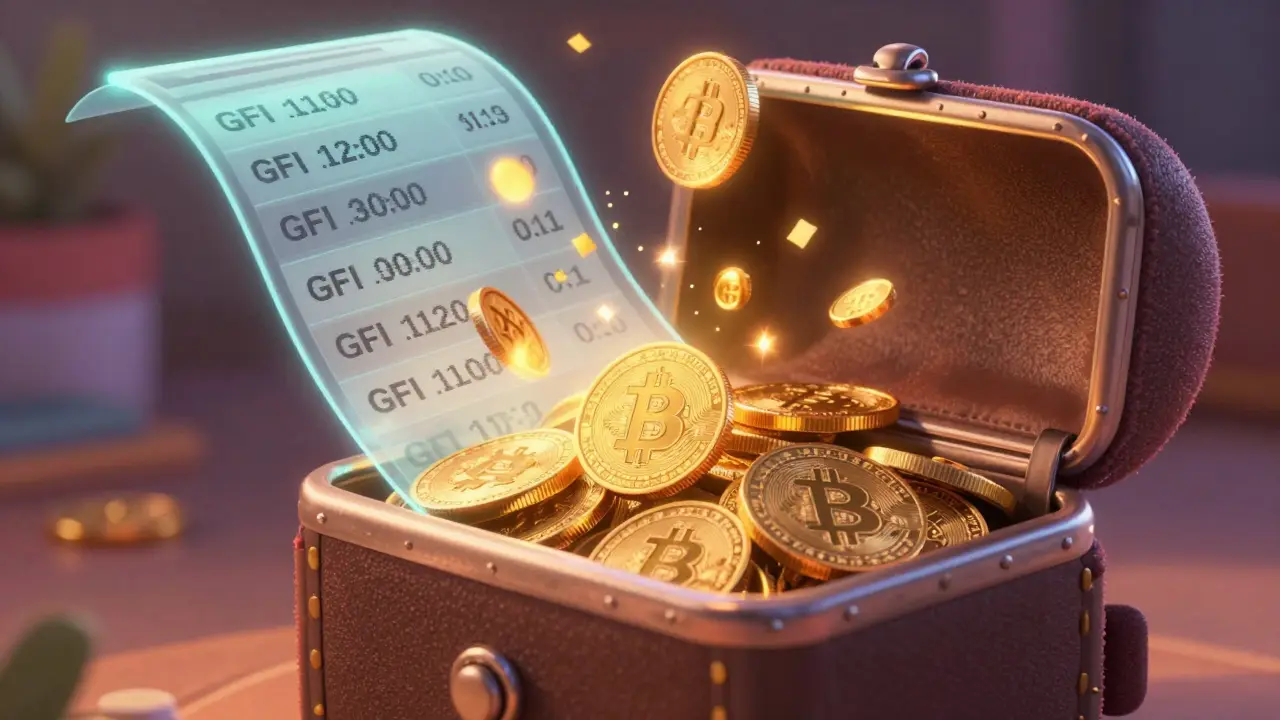
At its core, Gravity Finance is a suite of DeFi tools - yield farms, a launchpad for new projects, and planned features like automated investment vaults and derivatives trading. But the real engine is the GFI token. It’s not just used to vote on proposals. Every time someone uses a Gravity Finance product - like staking in a yield farm or swapping tokens on QuickSwap - a fee is charged. Half of that fee goes to ETH, half to BTC. And here’s the key: those BTC reserves don’t disappear. They’re locked in smart contracts, growing over time.
Most governance tokens give you voting power. GFI gives you a claim to Bitcoin. Holders don’t need to stake or lock up their tokens. Just owning GFI means you’re entitled to a share of the accumulated Bitcoin. Want to cash out? Burn your GFI tokens. The system automatically releases the corresponding BTC value from the reserves. This isn’t a promise. It’s a programmable, on-chain mechanism.
The Bitcoin Backing: A Real Asset, Not Just Marketing
Many crypto projects claim to be “backed” by something. GFI is one of the few that actually does it in a verifiable way. The Bitcoin reserves aren’t held by a company or a team. They’re stored in smart contracts on Polygon. Anyone can audit the contract addresses to see the BTC balance. As fees from trading, staking, and other services roll in, the reserves grow. That’s the intrinsic value - the more activity on the platform, the more Bitcoin backs each GFI token.
This is different from wrapped Bitcoin or BTC-backed stablecoins. Those are pegged to BTC. GFI isn’t pegged. It’s a claim. Think of it like owning shares in a company that holds gold in its vault. The value of your shares depends on how much gold is there, and how many shares exist. If fees keep flowing in and the supply of GFI doesn’t inflate too fast, the BTC backing per token could rise.
Tokenomics: Supply, Price, and Volatility
The numbers around GFI are messy - and that’s normal for a smaller DeFi project. Total supply is capped at 1.2 billion GFI. But circulating supply varies wildly depending on the source. Bitget says 352 million are in circulation. Kriptomat says over 1 billion. That gap suggests some tokens are locked, unreleased, or counted differently across platforms.
Price is even more erratic. CoinGecko lists GFI at around $0.000095. Stoic AI says $0.000266. Kriptomat shows €0.00417. That’s a 200%+ difference in just three sources. Why? Low trading volume. Daily volume on CoinGecko is under $40. On Stoic AI, it’s around $260. That’s not enough to stabilize price. One big trade can swing it 10% in minutes.
All-time highs hit €0.031 (around $33 at the time), while lows dropped to €0.000018. That’s a 1,700x range. This isn’t a stable investment. It’s a high-risk, high-potential play. If the platform gains traction and fees grow, the BTC backing could push value up. If not, the token could keep drifting lower.
Where to Trade GFI - And Why It Matters
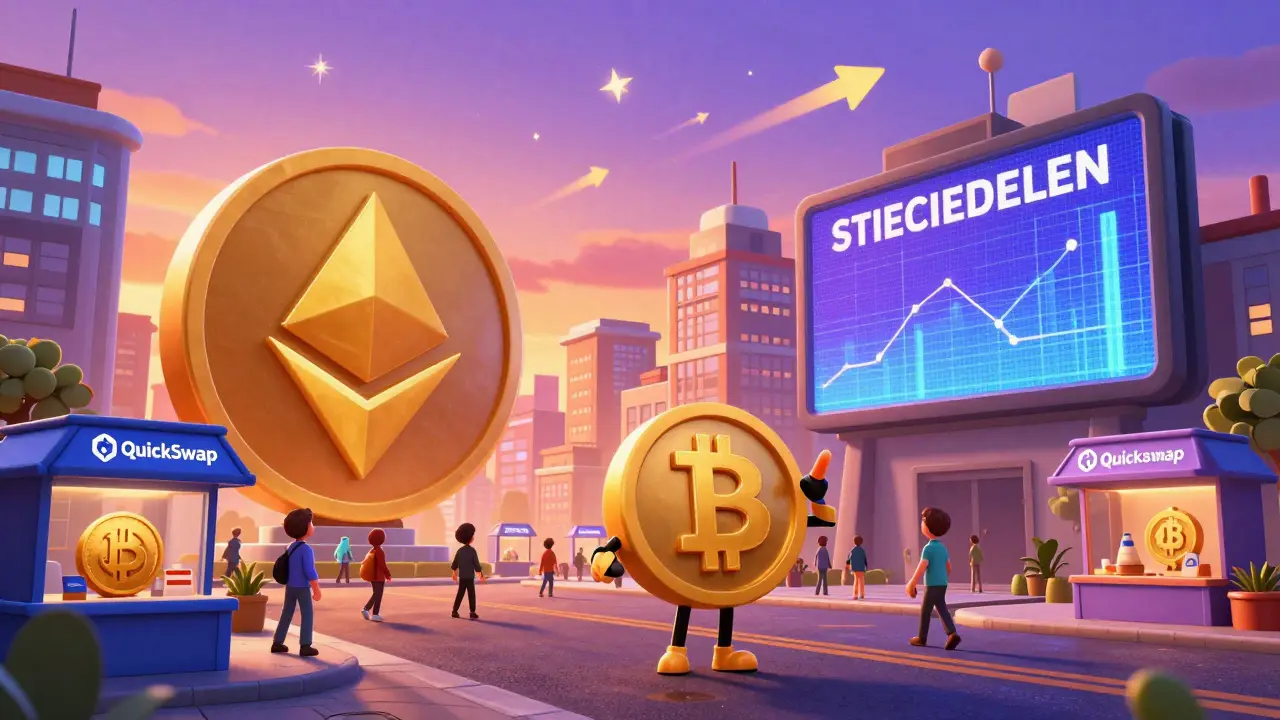
You won’t find GFI on Binance or Coinbase. It’s only available on decentralized exchanges, mostly QuickSwap v2 on Polygon. The main trading pairs are GFI/ETH, GFI/USDCE, and GFI/QUICK. That means you need to already have Polygon-based assets to buy it. No credit card, no fiat on-ramp. You need a wallet like MetaMask, some MATIC for gas, and a way to swap into ETH or USDC first.
This limits accessibility. Most retail investors won’t bother. It also concentrates risk. If QuickSwap has a bug or gets hacked, trading stops. There’s no backup exchange. That’s a red flag for anyone looking for liquidity or safety.
Competition and Positioning
Gravity Finance isn’t alone. Uniswap, Aave, and Compound dominate DeFi with billions in TVL. GFI competes in niche areas: yield farming on Polygon and governance with asset backing. Its edge? The Bitcoin reserve. No other major governance token does this. Most, like UNI or AAVE, are purely utility tokens - they give you voting rights and maybe fee discounts. GFI gives you a claim to Bitcoin.
But that’s also its weakness. If no one uses the platform, the reserves don’t grow. If fees drop, the backing weakens. It’s a chicken-and-egg problem. The token needs adoption to gain value, but value is needed to attract adoption.
Risks You Can’t Ignore
- Low liquidity: With daily volumes under $300, slippage is high. You might not get the price you expect when buying or selling.
- Single DEX reliance: If QuickSwap goes down or gets exploited, you’re stuck.
- Unproven mechanism: The Bitcoin-backing model is innovative, but it’s never been tested in a bear market or during a major DeFi crash.
- Opaque development: There’s no clear roadmap, no team bio, and minimal GitHub activity. You’re trusting code, not people.
- Price volatility: GFI has swung over 30% in a single day. It’s not for casual holders.
Future Plans: What Could Change Things
Gravity Finance has a roadmap. It’s not detailed, but it’s there. Upcoming features include:
- An AMM/swaps exchange (beyond QuickSwap)
- Automated vaults that rebalance your assets
- Derivatives trading for hedging and leverage
If these launch and get used, fees will rise. More fees mean more Bitcoin accumulation. More Bitcoin means higher perceived value for GFI. But none of this is guaranteed. DeFi projects die all the time. Many launch with big promises and fade within months.
The real test? Will users stick around long enough to make the reserves grow? Or will they abandon it once the novelty wears off?
Is GFI Worth It?
Here’s the bottom line:
- If you believe in Polygon-based DeFi and think Bitcoin-backed tokens have long-term value, GFI is a rare experiment worth watching.
- If you want safety, liquidity, or a proven track record - walk away.
- If you’re curious and want to test a novel model with small amounts - maybe try it. But treat it like a speculative bet, not an investment.
There’s no guarantee GFI will succeed. But it’s one of the few tokens that tries to tie governance to real-world assets - not just promises. That’s why it’s worth understanding.
Is Gravity Finance (GFI) backed by real Bitcoin?
Yes. Gravity Finance collects 50% of all platform fees in Bitcoin and stores it in smart contracts. Holders can burn their GFI tokens to claim a share of those Bitcoin reserves. The Bitcoin is not held by a company - it’s on-chain and publicly verifiable.
Where can I buy GFI crypto?
GFI is only available on decentralized exchanges, primarily QuickSwap v2 on the Polygon network. You can trade it against ETH, USDC, or QUICK. You cannot buy it directly with fiat on centralized exchanges like Binance or Coinbase.
Do I need to stake GFI to earn Bitcoin?
No. Unlike most DeFi tokens, you don’t need to stake, lock, or actively participate to earn Bitcoin. Simply holding GFI in your wallet entitles you to a share of the accumulated Bitcoin reserves from platform fees.
Why is GFI’s price so volatile?
GFI has very low trading volume - often under $300 per day. When few people are trading, even small buys or sells can move the price dramatically. It’s also a small, unproven project with no major exchange listings, making it prone to speculation.
Can I redeem Bitcoin for my GFI tokens right now?
Yes, but only through the burn function. If you want to claim Bitcoin, you must send your GFI tokens to a burn address. The system then releases the equivalent BTC value from the reserves. This is a one-way process - you lose your GFI and get BTC in return.
Is Gravity Finance safe to use?
It carries significant risk. The smart contracts haven’t been audited publicly. The team is anonymous. Trading is limited to one DEX. While the Bitcoin-backing model is innovative, it’s untested in a market downturn. Only invest what you can afford to lose.
What makes GFI different from UNI or AAVE?
UNI and AAVE are governance tokens that give you voting rights and sometimes fee discounts. GFI does that too, but it also gives you a direct claim to Bitcoin reserves. While other tokens rely on speculation or utility, GFI ties its value to an actual asset accumulating on-chain.
Is GFI a good long-term investment?
It’s too early to say. The project has potential, but no proven track record. Its success depends entirely on whether users adopt its DeFi products and generate enough fees to grow Bitcoin reserves. If it fails, GFI could become worthless. Treat it as a high-risk experiment, not a core portfolio holding.

Colin Lethem
March 2, 2026 AT 23:38kati simpson
March 3, 2026 AT 04:57Kaitlyn Clark
March 4, 2026 AT 13:17Mary Scott
March 5, 2026 AT 20:03Jeremy buttoncollector
March 7, 2026 AT 18:47Michelle Xu
March 8, 2026 AT 12:28Ryan Burk
March 10, 2026 AT 01:25Kristi Emens
March 10, 2026 AT 12:08Sriharsha Majety
March 11, 2026 AT 18:14Tabitha Davis
March 12, 2026 AT 12:33Vishakha Singh
March 12, 2026 AT 14:39Cory Derby
March 14, 2026 AT 07:26Don B.
March 15, 2026 AT 11:12Michelle Mitchell
March 16, 2026 AT 01:19christopher luke
March 17, 2026 AT 01:59Arya Dev
March 18, 2026 AT 11:27Shannon Holliday
March 20, 2026 AT 09:59