Single Finance (SINGLE) is a cryptocurrency built to let users earn rewards through yield farming and vote on protocol changes - all within the Cronos blockchain ecosystem. Launched in 2022, it never gained the traction of bigger DeFi projects, and by early 2026, its market presence is fragile. If you’re wondering whether SINGLE is worth paying attention to, here’s what’s actually happening with it - no hype, just facts.
What SINGLE actually does
Single Finance isn’t a payment coin like Bitcoin or a smart contract platform like Ethereum. It’s a DeFi token designed for two things: earning interest (yield farming) and voting on upgrades (governance). Users who hold SINGLE can lock their tokens into liquidity pools on VVS Finance - a decentralized exchange on Cronos - and earn more SINGLE or other tokens as rewards. The more you lock up, the more you earn, at least in theory.
But here’s the catch: unlike major DeFi protocols like Aave or Compound, Single Finance doesn’t publish clear details about how yields are calculated, what the annual percentage rates (APRs) are, or how often governance votes happen. There’s no public roadmap. No developer updates. No blog. Just a token on a chain, trading quietly.
Technical specs you need to know
Single Finance runs on the Cronos blockchain, which is Crypto.com’s Ethereum-compatible network. That means it works with wallets like MetaMask and supports smart contracts written in Solidity - the same language used on Ethereum. This makes it easy for developers to build on it, but also means it competes with hundreds of other DeFi projects already on EVM chains.
Here are the hard numbers as of October 2025:
- Total supply: 998,829,918 SINGLE tokens
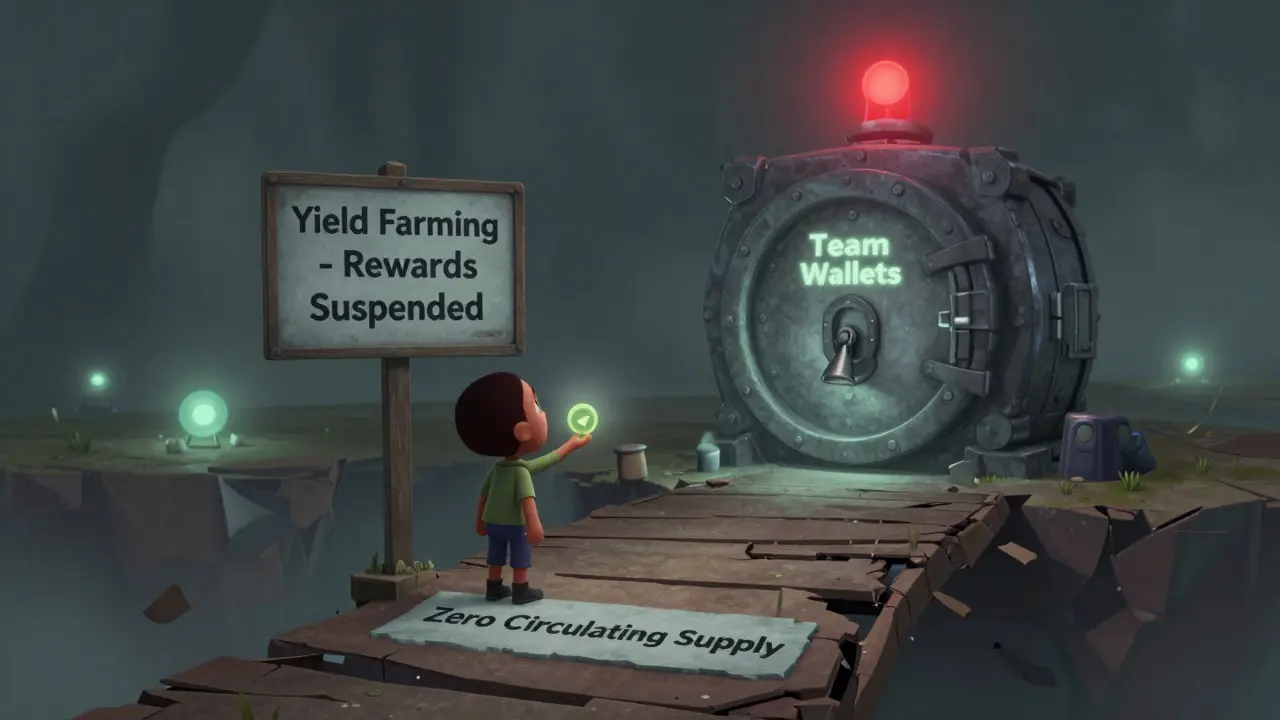
- Circulating supply: 0 (yes, zero)
- Price range: $0.000174 - $0.000239 USD
- 24-hour trading volume: ~$18,200 USD
- Market cap: $0 USD on most trackers
The fact that circulating supply is listed as zero is unusual. It suggests nearly all tokens are locked - maybe in staking contracts, team wallets, or vesting schedules. But without official documentation, no one knows for sure. This lack of transparency is a red flag in DeFi, where trust comes from openness.
Where you can trade SINGLE
You won’t find SINGLE on Binance or Coinbase. It’s only listed on smaller platforms:
- Gate.io - Main centralized exchange. Most volume here, with SINGLE/USDT as the primary pair.
- VVS Finance - Decentralized exchange on Cronos. Primary trading pairs: SINGLE/USDC and SINGLE/VVS.
- CRO-based pairs - Some liquidity exists on Cronos-native DEXs with SINGLE/CRO.
Liquidity is extremely thin. On VVS Finance, the SINGLE/USDC pair has only $510 in liquidity within a 2% price range. That means if someone tries to buy $1,000 worth of SINGLE, the price could swing wildly - maybe 20% or more - just from one trade. That’s not a market. That’s a gamble.
Price performance: A steep decline
Single Finance’s price has been falling for months. Here’s how it’s done over the last 90 days:
- 30-day change: -12.93%
- 60-day change: -37.20%
- 90-day change: -56.08%
On January 15, 2026, the price hovered around $0.000175. A few months earlier, it was above $0.0004. That’s more than a 50% drop in just six months. This isn’t just market-wide crypto weakness - it’s project-specific. Other DeFi tokens on Cronos, like VVS Finance’s own VVS token, have held up better. So why is SINGLE collapsing?
One theory: yield farming rewards dried up. If users aren’t earning enough to justify locking up their tokens, they leave. No one wants to stake a token that’s losing value faster than it pays out. That creates a death spiral - less liquidity → lower yields → more selling → lower price.
Is SINGLE a scam?
No, it’s not a scam - at least not in the classic sense. It’s not a fake team, no fake whitepaper, no promises of guaranteed returns. It’s listed on CoinMarketCap, CoinGecko, and Binance’s data feed. Those platforms don’t list every scam token.
But it’s also not a serious project. There’s no active Discord community. No Twitter updates from developers. No GitHub commits in the last six months. No press releases. No new features announced. It’s like a car with a working engine but no steering wheel - it runs, but it doesn’t go anywhere.

Who’s using SINGLE?
Hard to say. Trading volume is so low - under $20,000 per day - that even the biggest DeFi projects would call this a ghost town. The majority of trades happen on Gate.io and VVS Finance, which suggests the user base is mostly people already in the Cronos ecosystem. Maybe early investors. Maybe speculators looking for a quick flip. But not long-term users.
There are no reviews, no Reddit threads, no YouTube tutorials. Nothing. If you search “Single Finance tutorial,” you’ll find zero results. That’s not normal for a token that’s supposed to be used for yield farming and governance.
Why does this matter in 2026?
The DeFi space has cleaned up. In 2021, hundreds of yield farming tokens popped up overnight. Most vanished by 2023. Today, only a handful of protocols with strong tokenomics, real users, and transparent development survive. Single Finance doesn’t meet any of those criteria.
Cronos itself is still active - Crypto.com keeps pushing it as a low-fee alternative to Ethereum. But even within Cronos, projects like VVS Finance, KiloEx, and Crypto.com’s own DeFi wallet are far more prominent than SINGLE. It’s not even the top DeFi token on its own chain.
If you’re thinking of buying SINGLE because it’s cheap, remember: low price doesn’t mean low risk. It often means high risk. A $0.0001 token can drop to $0.00001 just as easily as it can rise to $0.001 - and with no demand, it’s far more likely to disappear.
Final take: Should you touch SINGLE?
If you’re looking to earn yield, there are better options. If you want to support a DeFi project with real growth, SINGLE isn’t it. If you’re gambling on a long shot, you’re not alone - but you’re also not likely to win.
Single Finance exists. It’s not dead. But it’s not alive either. It’s in limbo. No updates. No users. No clear purpose beyond being a token on a blockchain that few people care about. In 2026, that’s not an investment. That’s a footnote.
Is Single Finance (SINGLE) a good investment in 2026?
No, not based on current data. SINGLE has lost over 56% of its value in 90 days, has zero circulating supply reported, and shows no signs of development or community growth. Low trading volume and no transparency make it a high-risk, low-reward asset. There are far more active and reliable DeFi tokens on Cronos and other chains.
Why is the circulating supply of SINGLE listed as zero?
The circulating supply being shown as zero means nearly all tokens are locked up - possibly in staking contracts, team wallets, or vesting schedules. But since Single Finance hasn’t published official details, no one knows for sure. This lack of clarity is a major red flag in DeFi, where transparency builds trust. Without knowing who holds the tokens, you can’t assess risk or potential supply dumps.
Can I stake SINGLE to earn rewards?
Technically, yes - if you’re using VVS Finance or another Cronos-based platform that supports SINGLE liquidity pools. But there’s no public data on current APYs, lock-up periods, or reward distribution. The last known yields were likely unsustainable, and with the token’s price dropping over 50% in three months, any rewards you earn might not offset your losses. Proceed with extreme caution.
Where can I buy SINGLE crypto?
You can buy SINGLE on Gate.io (SINGLE/USDT pair) and VVS Finance (SINGLE/USDC and SINGLE/VVS pairs). It’s not listed on major exchanges like Binance, Coinbase, or Kraken. Trading volume is very low, so prices vary widely between platforms, and slippage can be high during trades.
Is Single Finance built on Ethereum?
No, it’s built on the Cronos blockchain, which is compatible with Ethereum’s Virtual Machine (EVM). That means you can use MetaMask and other Ethereum wallets to interact with it, but the underlying network is Cronos - not Ethereum. This gives it lower fees than Ethereum mainnet, but also limits it to users already in the Crypto.com ecosystem.
Does Single Finance have a team or official website?
There’s no official website, no team page, no LinkedIn profiles, and no public communication channels. The project’s original whitepaper and social media accounts appear abandoned. While this doesn’t prove fraud, it does mean there’s no way to verify its future plans or track development progress - a major disadvantage compared to active DeFi projects.

Pamela Mainama
February 1, 2026 AT 01:21Steven Dilla
February 1, 2026 AT 19:13Rachel Stone
February 2, 2026 AT 23:39Will Pimblett
February 4, 2026 AT 06:11Christopher Michael
February 4, 2026 AT 09:57Parth Makwana
February 5, 2026 AT 08:09Elle M
February 7, 2026 AT 05:05Rico Romano
February 8, 2026 AT 17:54Crystal Underwood
February 10, 2026 AT 06:29Raymond Pute
February 12, 2026 AT 05:51Calvin Tucker
February 13, 2026 AT 13:56Gustavo Gonzalez
February 15, 2026 AT 00:54Mark Ganim
February 16, 2026 AT 01:25mary irons
February 17, 2026 AT 05:01Wayne mutunga
February 18, 2026 AT 11:24Gavin Francis
February 18, 2026 AT 19:30Rob Duber
February 18, 2026 AT 22:40Steven Dilla
February 19, 2026 AT 01:09