UPCX (also called UPC) is a blockchain built for fast, low-cost payments - not just another altcoin. Unlike many cryptocurrencies that try to do everything, UPCX focuses on one thing: making digital money move like cash, but globally. It’s not Bitcoin. It’s not Ethereum. It’s designed to handle real-world transactions - sending money across borders, paying for goods, or settling payments between businesses - without the delays or fees of traditional banking.
How UPCX Actually Works
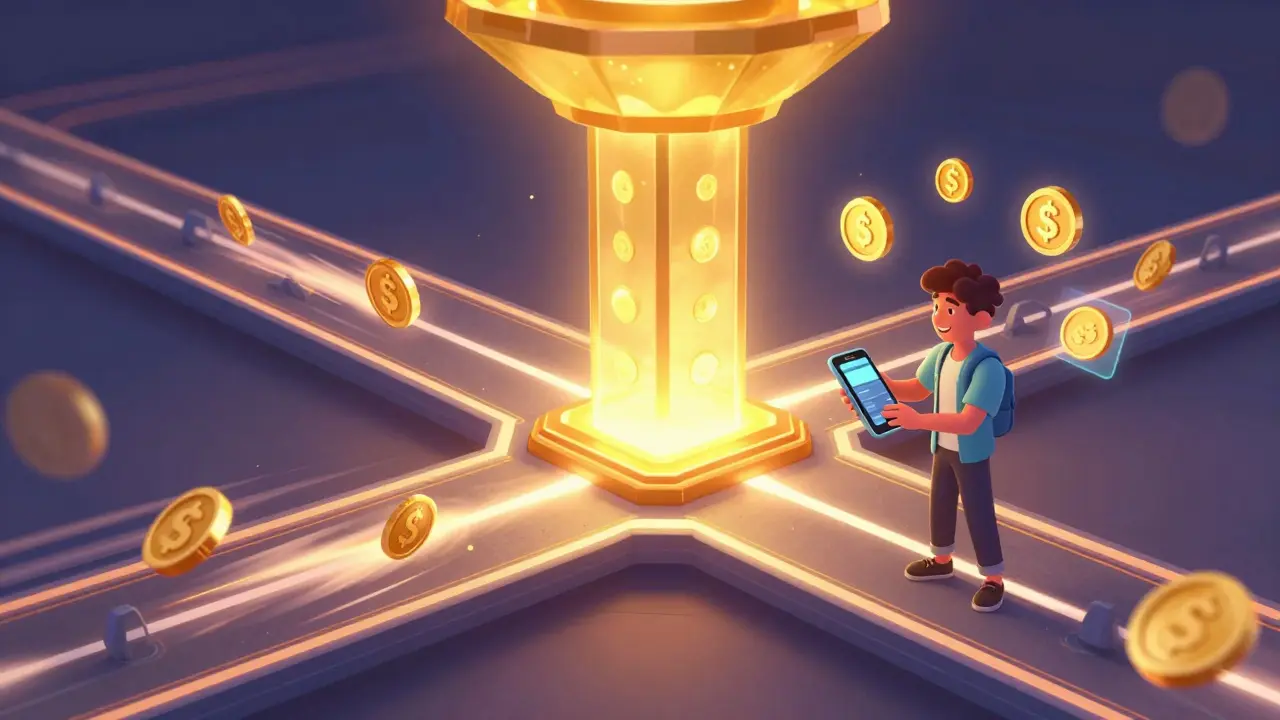
At its core, UPCX runs on a modified version of the Graphene blockchain, the same tech behind Steemit and BitShares. But it adds something unusual: a shard-based architecture with a central Beacon Chain. Think of it like a highway system. Instead of one road where all traffic jams up, UPCX splits transactions across multiple parallel lanes (shards). The Beacon Chain keeps everything synchronized so payments don’t get lost or double-spent.
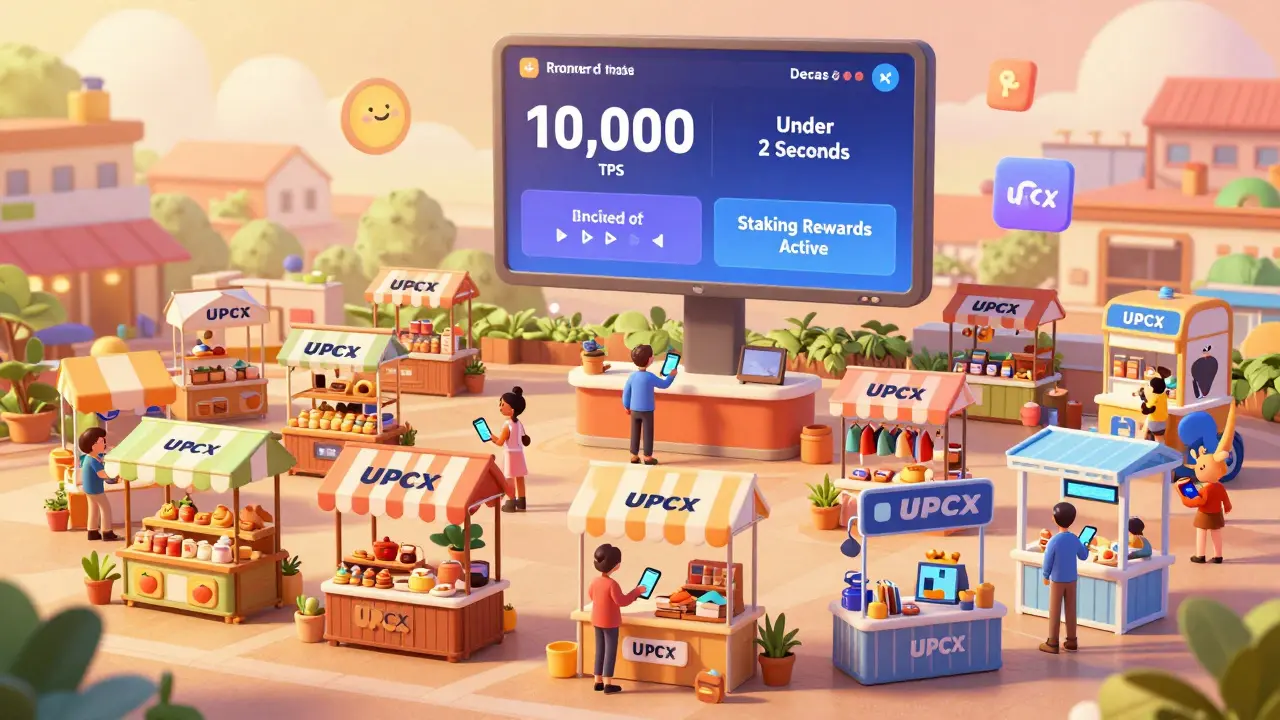
This design lets UPCX process thousands of transactions per second - close to what Visa or Mastercard can handle. Most blockchains struggle to hit 100 TPS. Bitcoin does about 7. Ethereum does around 30. UPCX claims 10,000+ TPS under load. That’s not marketing fluff - it’s baked into the architecture. And because it uses Delegated Proof of Stake (DPoS), blocks are confirmed in under two seconds. No waiting 10 minutes for a confirmation like with Bitcoin.
What You Can Do With UPCX
UPCX isn’t just a currency. It’s a financial toolkit. Here’s what you can build or use on it:
- Market Pegged Assets (MPA): These are stablecoins backed by real assets like USD, EUR, or gold. Unlike USDT or USDC, which are issued by companies, MPAs on UPCX are created and managed by users through smart contracts. Each MPA must be overcollateralized - meaning you lock up more than $1 worth of UPCX to issue $1 of UPCX-USD.
- User Issued Assets (UIA): Anyone can create their own token on the network. A small business could issue loyalty points. A community could launch a local currency.
- Non-Fungible Assets (NFA): Similar to NFTs, but designed for real-world use - think property deeds, certificates, or licenses recorded on-chain.
- Decentralized Exchange (DEX): Trade UPCX, MPAs, and UIAs directly without intermediaries. No KYC. No custodial risk.
- Cross-Chain Bridge: Move assets between UPCX and other chains like Ethereum or BSC. This is still in development, but it’s planned for Q2 2024.
These features make UPCX more than a payment network - it’s a full-stack financial operating system. You can send money, issue money, trade money, and verify ownership - all in one place.
Where You Can Buy UPCX
As of January 2026, UPCX trades on exchanges like MEXC, LBank, and Gate.io. The most active trading pair is UPC/USDT. You can buy it with credit card, bank transfer, or PayPal on MEXC. The price hovered around $0.56 in late January 2026, with a market cap near $55 million. That puts it in the mid-tier crypto space - far behind XRP or Stellar, but larger than hundreds of other obscure tokens.
There’s no official UPCX wallet, but any wallet that supports the Graphene blockchain can hold it. Popular options include Scatter (desktop) and TokenPocket (mobile). The network’s low fees - often under $0.01 per transaction - make it practical for micro-payments.

Who’s Using UPCX?
Real adoption is still small, but growing. As of January 2026, there are about 48,000 active wallet addresses. The biggest user base is in Southeast Asia, especially the Philippines, where 37% of all UPCX transactions occur. Why? Because it’s cheap and fast for remittances. A worker in Singapore sending money home to Manila can use UPCX to cut fees from 8% to less than 1%.
There are only about 217 merchants that accept UPCX directly - mostly online stores and remittance services. That’s a major bottleneck. No one will use a cryptocurrency if they can’t spend it. UPCX’s roadmap includes adding 10,000 merchants by end of 2026. If they hit that, adoption could spike. If not, it’ll stay a niche asset.
Pros and Cons
Here’s the honest breakdown:
Pros
- Blazing-fast transactions (under 2 seconds)
- Extremely low fees (often under $0.01)
- Multi-asset support - send USD, gold, or custom tokens in one transaction
- Open-source and transparent codebase with 147 active GitHub contributors
- Staking rewards - hold UPCX to help secure the network and earn more
Cons
- Limited merchant acceptance - only 217 stores accept it
- Depends on DPoS consensus - fewer validators than Bitcoin or Ethereum, which reduces decentralization
- Confusing documentation - technical specs are solid, but beginner guides are thin
- Market cap is small - easy to manipulate, low liquidity on most exchanges
- Unclear tokenomics - nobody knows exactly how many tokens are held by founders or early investors
Is UPCX a Good Investment?
It’s not a buy-and-hold coin like Bitcoin. It’s a bet on adoption. If UPCX gets 10,000 merchants onboarded by 2026, the price could triple or quadruple. If they fail, it’ll likely fade into obscurity like dozens of other payment-focused blockchains.
Right now, it’s a speculative play. The tech is real. The team has built something that works. But without real-world usage, it’s just code on a server. The fact that it’s used for remittances in the Philippines is promising - that’s a real pain point being solved. But scaling beyond that is a huge challenge.
How Does UPCX Compare to Other Payment Coins?
Let’s compare UPCX to its closest rivals:
| Feature | UPCX | XRP | Stellar | Nano |
|---|---|---|---|---|
| Transaction Speed | Under 2 seconds | 3-5 seconds | 2-5 seconds | Under 1 second |
| Fee per Transaction | ~$0.005 | ~$0.0001 | ~$0.0001 | $0 |
| Max Supply | 780 million | 100 billion | 50 billion | 133 million |
| Market Cap (Jan 2026) | $55M | $28B | $3.2B | $180M |
| Consensus | DPoS + BFT | Consensus Protocol | Stellar Consensus Protocol | Open Voting |
| Stablecoins Supported | Yes (MPA) | No | Yes | No |
| Merchant Adoption | 217 | 1,200+ | 800+ | 150+ |
UPCX is slower than Nano but more feature-rich. It’s pricier than XRP or Stellar but offers more financial tools. If you want pure speed and low cost, Nano wins. If you want institutional backing and global reach, XRP still leads. UPCX is the wildcard - it’s trying to combine the best of both.
Future Roadmap
UPCX’s roadmap, updated in December 2023, includes:
- Q2 2024: Enhanced cross-chain bridge to Ethereum and Solana
- Q3 2024: Institutional payment APIs for banks and fintechs
- Q4 2024: On-ramp integration with PayPal and Stripe
- 2025: Mobile app with built-in wallet and merchant QR payments
If they deliver on these, UPCX could become a serious player in cross-border payments. If they delay or fail to execute, the project risks being forgotten.
Final Thoughts
UPCX isn’t a scam. It’s not a meme. It’s a working blockchain with real tech, real users, and real use cases - mostly in remittances and niche e-commerce. But it’s also not a sure thing. The crypto space is full of projects with great code and zero adoption. UPCX’s biggest hurdle isn’t technology - it’s getting merchants to accept it.
If you’re a crypto-native user who wants to experiment with a fast, low-cost payment network, UPCX is worth trying. Send a few dollars. See how it works. But don’t bet your savings on it. The market cap is too small. The adoption is too thin. The risks are real.
UPCX could be the next big thing in payments. Or it could be another footnote in crypto history. Right now, it’s still in the ‘prove it’ phase. And the world is watching.
Is UPCX the same as UPC token?
Yes. UPCX and UPC refer to the same cryptocurrency. The official ticker symbol is UPCX, but many exchanges and users shorten it to UPC. Both names point to the same blockchain and token supply.
Can I mine UPCX?
No. UPCX doesn’t use mining. It uses Delegated Proof of Stake (DPoS), which means users stake their tokens to help validate transactions. You earn rewards by holding and staking UPCX, not by running mining hardware.
Is UPCX secure?
Yes, technically. The blockchain has been live since 2021 with no major hacks. Its consensus mechanism (DPoS + BFT) is battle-tested and used by other high-performance chains. However, security also depends on how you store your tokens. Always use a non-custodial wallet and never share your private keys.
Why is UPCX’s price so volatile?
UPCX has a relatively small market cap ($55M as of early 2026), which makes it more sensitive to buying and selling pressure. Low liquidity on exchanges means even modest trades can move the price. It’s not unusual for it to swing ±10% in a day. This is common for mid-to-lower tier cryptos.
Where can I see UPCX’s blockchain activity?
You can explore the UPCX blockchain using block explorers like upcx.io/explorer or Blockchair. These show live transactions, wallet balances, and network stats. You can also check GitHub for code updates and developer activity.
Does UPCX have a mobile app?
Not yet. As of early 2026, UPCX doesn’t have an official mobile app. Users rely on third-party wallets like TokenPocket or Scatter. An official app is planned for 2025 as part of their roadmap.
Can I use UPCX to pay for everyday things like groceries?
Not yet. Only about 217 merchants globally accept UPCX directly - mostly online stores and remittance services. You can’t walk into a supermarket and pay with UPCX like you would with Bitcoin or Ethereum. Widespread merchant adoption is the biggest challenge for the project.

Joseph Pietrasik
January 31, 2026 AT 16:57Edward Drawde
February 1, 2026 AT 09:47Will Pimblett
February 1, 2026 AT 23:39Gurpreet Singh
February 2, 2026 AT 13:52Lori Quarles
February 3, 2026 AT 16:09mary irons
February 4, 2026 AT 04:54Rob Duber
February 5, 2026 AT 23:45Katie Teresi
February 7, 2026 AT 19:50Robert Mills
February 9, 2026 AT 16:01Tressie Trezza
February 9, 2026 AT 23:29Nickole Fennell
February 11, 2026 AT 01:41Parth Makwana
February 12, 2026 AT 07:41Meenal Sharma
February 13, 2026 AT 03:59Wayne mutunga
February 13, 2026 AT 19:34Gavin Francis
February 14, 2026 AT 10:37Mark Ganim
February 14, 2026 AT 18:17