
You’ve probably heard of Ethereum or Solana. You might even know about niche projects that promise high yields. But Lattice Token (LTX) is a specialized ERC-20 cryptocurrency serving as the native governance and utility asset for Lattice Gateway, a decentralized finance platform built on Ethereum and Constellation Network’s Hypergraph Transfer Protocol. It doesn’t scream for attention in mainstream news feeds. Instead, it operates quietly as the backbone of a specific ecosystem designed to help early-stage crypto projects find liquidity.
If you are wondering whether LTX is just another meme coin or if it has actual utility, you aren't alone. The crypto space is flooded with tokens that look similar on paper but differ wildly in execution. LTX belongs to the latter category-it’s tied directly to infrastructure. Specifically, it powers Lattice Gateway, which acts as a bridge between new token launches and established markets.
The Core Purpose: A Gateway to Liquidity
Let’s cut through the jargon. What does Lattice actually do? Imagine you have a brilliant idea for a new crypto project. You build the tech, but you have no users and no way for people to buy your token easily. That is where Lattice comes in.
Lattice Gateway was originally launched in 2020 as Lattice Exchange v1. Its goal hasn't changed much: create a path to liquidity for businesses within the Constellation Network ecosystem. Unlike generic exchanges that list anyone who pays a fee, Lattice focuses on projects aligned with Constellation’s technology. It provides a structured environment where these projects can launch tokens, run staking programs, and manage their initial liquidity.
For you, the user, LTX is the key to this kingdom. It isn't just a store of value; it’s a tool. You use it to vote on how the platform evolves, and you lock it up to earn rewards from other projects launching on the network. This dual role-governance plus utility-is what separates it from pure speculation assets.
How Lattice Gateway Works Technically
Most decentralized exchanges (DEXs) run entirely on one blockchain. Lattice takes a hybrid approach. It uses Ethereum for its smart contracts because that’s where most users and liquidity sit today. However, it also integrates with Constellation’s Hypergraph Transfer Protocol (HGTP).
Why does this matter? HGTP is a DAG-based infrastructure designed for data interoperability and state channels. By combining Ethereum’s security and user base with Constellation’s data layer, Lattice aims to offer smoother cross-chain interactions for its hosted projects. Think of it as having the safety of a bank vault (Ethereum) with the speed of a digital transfer system (HGTP).
Under the hood, Lattice uses an Automated Market Maker (AMM) model, similar to Uniswap. Liquidity providers deposit funds into pools and earn transaction fees. But here’s the twist: the platform curates these pools based on the "Path to Liquidity" roadmap, meaning not every random token gets a spot. This curation helps protect users from some of the worst scams common in open DEX environments.
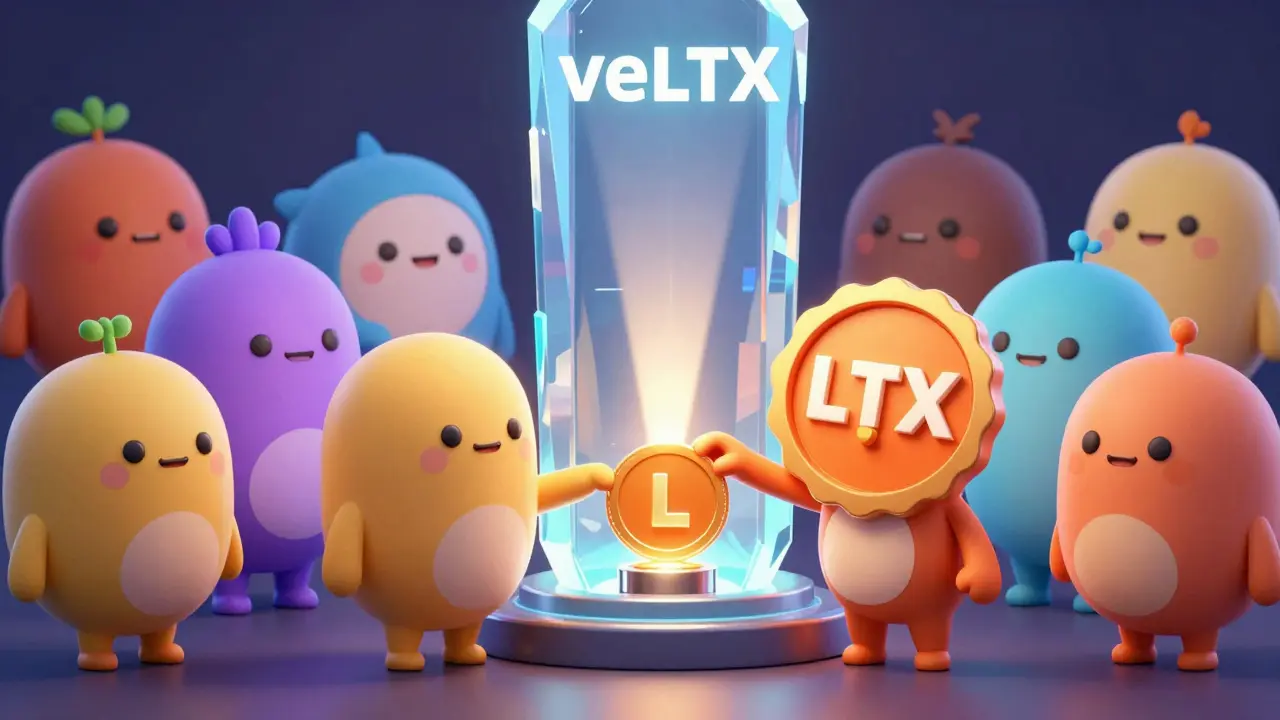
Governance and the Power of veLTX
This is where things get interesting for long-term holders. Lattice doesn’t just let anyone vote with their wallet balance instantly. It uses a mechanism called vote-escrowed LTX (veLTX).
To participate in governance, you must lock your LTX tokens for a set period. In return, you receive veLTX. These veLTX tokens give you voting power over critical decisions, such as:
- Which new projects get listed on the Launchpad.
- How liquidity incentives are distributed.
- Changes to the platform’s fee structure.
Locking your tokens also allows you to stake them feelessly in the Launchpad. This creates a strong incentive for serious participants to hold LTX long-term rather than selling immediately after buying. If you want influence in the ecosystem, you need skin in the game. This model aligns the interests of developers, investors, and everyday users.
Tokenomics: Supply and Circulation
Before you buy any crypto, you need to understand the supply dynamics. LTX has a fixed total supply of 100,000,000 tokens. As of mid-2026, only about 28.65 million LTX are in circulation. That means roughly 71% of the tokens are still locked, held by the treasury, or reserved for future incentives.
| Metric | Value |
|---|---|
| Total Supply | 100,000,000 LTX |
| Circulating Supply | ~28,653,895 LTX |
| Blockchain | Ethereum (ERC-20) |
| Primary Use Case | Governance, Staking, Launchpad Access |
| Market Status | Microcap / Low Volume |
This large amount of undistributed supply is a double-edged sword. On one hand, it gives the project plenty of room to reward users and fund development without running out of gas. On the other hand, if those tokens are released too quickly, it could dilute the value of existing holdings. Always keep an eye on the unlock schedule if you plan to invest heavily.
Price Action and Market Reality
Let’s talk numbers. LTX is not a blue-chip asset like Bitcoin or Ethereum. It trades in the microcap range. As of late June 2026, LTX hovers around $0.01 USD. Daily trading volumes typically stay in the low five-figure range, often between $18,000 and $22,000.
What does this mean for you? It means liquidity is thin. If you try to buy or sell a large amount of LTX at once, you will likely experience significant slippage-your order will move the price against you. This isn’t a place for day traders looking to flip millions in volume. It’s more suited for strategic investors who believe in the long-term growth of the Constellation ecosystem.
Historical data shows modest volatility. Unlike meme coins that swing 50% in a day, LTX tends to move slowly, tracking broader market trends with smaller fluctuations. This stability is partly due to its low trading volume and partly because its value is tied to utility rather than hype cycles.

Where to Buy and Store LTX
Since LTX is an ERC-20 token, you can store it in any standard Ethereum-compatible wallet like MetaMask, Trust Wallet, or Ledger. To acquire it, you have a few options:
- Centralized Exchanges: Platforms like Coinbase, Kraken, and Crypto.com list LTX pairs. These are good for beginners because they offer easy fiat on-ramps.
- Decentralized Venues: For deeper liquidity, many traders use platforms like Biconomy. Since Lattice itself is a DEX, you might also find direct trading opportunities there, though liquidity varies.
Once you have LTX in your wallet, you can connect to the Lattice Gateway interface to lock your tokens for veLTX or participate in staking programs for other ecosystem projects.
Risks You Should Know
No investment is risk-free, and LTX carries specific challenges:
- Liquidity Risk: With daily volumes under $25k, exiting a large position can be difficult without impacting the price.
- Concentration Risk: With over 70% of supply yet to circulate, major unlocks could pressure the price downward.
- Ecosystem Dependency: LTX’s success is tightly bound to Constellation Network. If Constellation fails to gain adoption, LTX loses its primary value driver.
- Regulatory Uncertainty: Like all governance tokens, LTX faces potential regulatory scrutiny depending on how lawmakers define utility vs. securities.
Always do your own research. Don’t invest money you can’t afford to lose, especially in microcap assets.
Is Lattice Token Worth Your Attention?
If you are looking for quick profits, LTX probably isn’t for you. The low volume and stable price action suggest it’s a slow burner. However, if you believe in the vision of a curated, cross-chain DeFi ecosystem that supports early-stage projects, LTX offers genuine utility.
It’s not just a ticker symbol; it’s a membership card to the Constellation web3 gateway. By holding and locking LTX, you help decide which projects succeed and share in the rewards generated by the platform. That kind of active participation is rare in the crypto world. Whether that’s enough to justify your interest depends entirely on your belief in the underlying technology and the team behind it.
What is the main use case for Lattice Token (LTX)?
LTX serves two primary purposes: governance and utility. Users lock LTX to obtain veLTX, which grants voting rights over platform decisions like new listings and fee structures. Additionally, LTX is used to access staking programs and participate in the Lattice Launchpad for early-stage projects.
How does Lattice Gateway differ from other DEXs?
Unlike open DEXs that list any token, Lattice Gateway curates projects aligned with the Constellation Network. It combines Ethereum smart contracts with Constellation’s Hypergraph Transfer Protocol (HGTP) for better interoperability. It also features a "Path to Liquidity" roadmap that guides projects from launch to mature trading.
What is veLTX and why should I care?
veLTX stands for vote-escrowed LTX. When you lock your LTX tokens for a specific duration, you receive veLTX. This token represents your governance power. The longer you lock, the more voting weight you have. It also allows you to stake feelessly in the Launchpad, making it essential for active participants.
Is LTX a safe investment?
LTX is considered a high-risk, microcap asset. It has low trading volume and a significant portion of its supply is yet to circulate. While it has real utility within the Constellation ecosystem, its price is volatile and dependent on the success of the broader network. Only invest what you can afford to lose.
Where can I buy Lattice Token?
You can buy LTX on several centralized exchanges including Coinbase, Kraken, and Crypto.com. For decentralized trading, platforms like Biconomy are popular venues. Once purchased, you can withdraw LTX to any ERC-20 compatible wallet such as MetaMask.
What is the relationship between Lattice and Constellation Network?
Lattice Gateway is a core component of the Constellation Network ecosystem. It acts as the entry point for web3 projects to launch tokens and gain liquidity. Lattice utilizes Constellation’s Hypergraph Transfer Protocol (HGTP) alongside Ethereum to provide cross-chain functionality and data interoperability.

Brad Semp
July 4, 2026 AT 01:28It is truly amusing to observe the sheer ignorance surrounding this so-called 'gateway.' The notion that a microcap token with less than $25,000 in daily volume represents anything other than a speculative trap for the uneducated is laughable. One must possess a certain level of financial literacy to recognize that liquidity is not merely a buzzword but the lifeblood of any viable asset class. To suggest otherwise is to display a profound lack of understanding regarding market mechanics.
Kat Barr
July 4, 2026 AT 20:21Oh my gosh!! I actually think this is pretty cool!!! 😍 Like, who knew there was a whole ecosystem just for helping new projects get started?? It feels so supportive and community driven!!! I love the idea of voting on what gets listed because then we have a say in it!!! 🙌✨
Logan Edmison
July 5, 2026 AT 15:23the nature of value is purely subjective yet here we are trying to quantify it through these artificial constructs... i wonder if the lockup period is a metaphor for our own entrapment in systems we did not create? maybe the true utility is the illusion itself...
Korn Arrieta
July 6, 2026 AT 19:56This analysis is superficial at best. You ignore the fundamental flaw in the veLTX model: it creates an artificial scarcity that benefits early insiders while retail investors face dilution from the massive unlock schedule. The 71% locked supply is not a feature; it is a ticking time bomb waiting to crush price action when those tokens hit the market. Do your due diligence or lose your shirt.
Ruth Williams
July 8, 2026 AT 17:09One must approach such ventures with extreme caution. The reliance on Constellation Network’s Hypergraph Transfer Protocol is precarious at best. If the underlying infrastructure fails to gain traction, LTX becomes nothing more than digital confetti. It is irresponsible to promote this without highlighting the severe dependency risks involved.
Sophie Nakasako
July 9, 2026 AT 06:56I find the concept of curated liquidity fascinating! It really makes you think about how we can build better systems for emerging creators. Does anyone else feel like this could be a blueprint for other industries beyond crypto? I’d love to hear thoughts on how this governance model might apply to decentralized social platforms!
Antony Lopez
July 11, 2026 AT 02:57American innovation should not be tied to foreign DAG protocols. This hybrid approach is weak. Stick to pure Ethereum or go home. The security implications of mixing chains are too great for me to care about this niche project. It lacks the robustness required for serious institutional adoption in the US market.
Russ Fincham
July 12, 2026 AT 09:05The technical integration of HGTP with Ethereum smart contracts is theoretically sound but practically unproven. Most cross-chain bridges have failed due to complexity and attack vectors. Lattice attempts to solve interoperability but introduces additional points of failure. A formal audit of the bridge mechanism would be necessary before considering any allocation.
Tawny Holmes
July 14, 2026 AT 04:47Liquidity is thin. Slippage will eat you alive. Don't buy.
Curtis Johnson
July 14, 2026 AT 18:13Wow!! That is a lot to take in! But hey, maybe we can all learn from each other here! I think the community aspect is huge! Let's keep the conversation respectful and open-minded! Who knows what amazing things could come from this collaboration?! 🤝💫
Steven Briggs
July 15, 2026 AT 10:35i see what you mean about the risks... it does seem quiet out there... maybe its better to wait and see how it plays out...
Hamza k
July 16, 2026 AT 13:58Holy smokes! Did you read the part about the staking rewards?! That sounds like absolute gold mine potential if you lock it up long enough! I’m already imagining the compounding gains rolling in like a tidal wave of wealth! 🌊💰 Who else is ready to dive into the deep end with this one?!
Kristy Morrow
July 18, 2026 AT 00:11everyone loves a good narrative but let us look at the numbers... low volume means easy manipulation... the elites pump and dump while you hold the bag... wake up sheeple... the real game is off-chain...
John Harman
July 19, 2026 AT 02:46Look, I've been in crypto since 2013 and this stuff is standard fare now. ERC-20 governance tokens are dime a dozen. Unless you're getting in at the ground floor, which you aren't, it's just another play. The tech is fine but the hype is non-existent for a reason. Move on.
Michelle Walker
July 20, 2026 AT 10:59You are missing the point entirely. The concentration risk is astronomical. With 70% of supply controlled by insiders, your 'governance' is a joke. They vote for themselves. Get out now before the rug pull happens. Stop pretending this is democracy.
Shay Thomson
July 22, 2026 AT 01:53Man, it’s wild how much energy goes into analyzing these charts! I guess everyone has their own way of finding peace in the chaos! Let’s just hope the technology delivers what it promises! No need to stress over every little dip! 🧘♂️✨
DJ Maleko
July 23, 2026 AT 19:16Hey buddy, why don’t you check the wallet addresses of the top holders? You’ll see exactly where the money is going. It’s not in the hands of the people, it’s in the hands of the whales. Wake up! 🐋📉