
Imagine paying for your morning coffee with a digital token issued directly by the Federal Reserve or the European Central Bank. No bank account needed, no third-party processor taking a cut, just pure, instant legal tender on your phone. This isn't science fiction anymore. It is the reality of Central Bank Digital Currency (CBDC), which is government-backed digital money designed to modernize national payment systems and compete with private cryptocurrencies. As we move through 2026, the line between state-controlled digital cash and decentralized coins like Bitcoin is blurring, but the competition has never been sharper.
The global landscape has shifted dramatically. Just a few years ago, CBDCs were niche experiments conducted by a handful of tech-savvy nations. Today, 134 countries-representing 98% of global GDP-are actively exploring or developing their own digital currencies. This isn't just about keeping up with trends; it's a strategic response to the rise of private crypto. Governments are waking up to the fact that if they don't control the future of money, someone else will. But here is the real question: can a government-issued digital dollar actually survive alongside the wild west of private crypto?
The Scale of the Shift: From Experiment to National Priority
To understand why this matters to you, look at the numbers. In 2023, only 114 countries were looking into CBDCs. By 2025, that number jumped to 134. Among these, 81 central banks are in the exploration phase, while 69 have moved to pilot programs or full development. That is massive momentum. For context, the G20 nations are leading the charge, with 19 exploring and 16 already in development stages.
Why the rush? It’s not just about efficiency. It’s about sovereignty. When citizens start using stablecoins or Bitcoin for daily transactions, central banks lose visibility into monetary flow. They lose the ability to enforce sanctions, track inflation accurately, or stimulate the economy during crises. A CBDC gives them that control back. However, actual deployment is still tricky. Conflicting reports suggest anywhere from 4 to 11 countries have fully launched retail CBDCs as of 2025, including the Bahamas, Nigeria, Jamaica, and Zimbabwe. These early adopters are testing waters that larger economies are still hesitant to dive into completely.
Cross-Border Payments: The Real Battleground
If domestic payments are one side of the coin, cross-border transfers are where the rubber meets the road. Traditional banking systems are slow, expensive, and opaque. Sending money from New York to Tokyo can take days and cost a fortune in fees. Private cryptocurrencies promised to solve this with near-instant, low-cost transfers. Now, CBDCs are stepping in to claim that victory.
| Feature | Traditional Banking (SWIFT) | Private Crypto (Bitcoin/Stablecoins) | CBDC Networks (mBridge/Dunbar) |
|---|---|---|---|
| Speed | 1-5 Business Days | Minutes to Hours | Near Instant |
| Cost | High (Multiple Intermediaries) | Variable (Network Congestion) | Low (Direct Settlement) |
| Regulatory Clarity | High | Low/Uncertain | High (Government Backed) |
| Reversibility | Yes (Complex Process) | No (Irreversible) | Yes (Controlled by Issuer) |
In 2025, $59 billion worth of cross-border transactions were processed via CBDCs, a 45% increase from the previous year. Projects like mBridge and Project Dunbar are connecting major economies, creating a web of interoperability that private crypto networks struggle to match legally. Twenty-nine countries are participating in these initiatives, backed by 17 bilateral agreements. This isn't just tech innovation; it's geopolitical strategy. By harmonizing regulations, these nations are building a walled garden that offers speed without the regulatory risk associated with unregulated tokens.

Design Matters: Retail vs. Wholesale and Privacy Concerns
Not all CBDCs are created equal. Some are designed for everyday consumers (retail), while others are for banks and institutions (wholesale). The Reserve Bank of India, for example, is expanding both, adding offline functionality so people can pay even without internet access. Japan’s approach is more methodical, focusing on user experience and universal access since its pilots began in 2023.
But here is where it gets controversial. Privacy. With private crypto, you control your keys. You decide who sees your transaction history (or hide it entirely). With a CBDC, the issuer-the central bank-has a ledger of every transaction. While proponents argue this helps fight money laundering and terrorism financing (with 48% of countries aligning AML/CFT regulations for smoother flows), critics fear total surveillance. The International Monetary Fund (IMF) notes that careful design, such as holding limits and anonymity tiers, can mitigate these fears. But can you really trust a government with a button that could freeze your assets?
The Security Paradox: Resilience vs. Vulnerability
One argument often made against private crypto is security. Hack exchanges get robbed. Users lose passwords. CBDCs promise the security of the state. Over 100 central banks see this as an opportunity to build resilient infrastructure. However, the IMF warns that CBDC ecosystems are vast and complex. They amplify existing risks and create new vulnerabilities. A cyberattack on a central bank’s core system could paralyze an entire nation’s economy, whereas a hack on a private exchange affects only that platform’s users.
This creates a unique dynamic. Private crypto offers censorship resistance. If a government wants to sanction you, they can’t easily stop you from moving Bitcoin across borders (though they can block on/off ramps). A CBDC, by definition, is programmable and controllable. It can be used to enforce negative interest rates, direct stimulus payments to specific sectors, or restrict spending habits. For some, that’s safety. For others, it’s a dystopian nightmare.
Impact on Commercial Banks: The Run Risk
Perhaps the biggest hurdle for CBDC adoption isn't technology-it's economics. What happens to your local bank if everyone moves their savings into a risk-free CBDC wallet? The Atlantic Council highlights the risk of "bank runs." In a crisis, citizens might instantly convert deposits to CBDCs, draining liquidity from commercial banks. This could cripple lending capabilities and shock interest rates.
To prevent this, many designs include caps on how much CBDC an individual can hold. But this limits utility. If I can only keep $3,000 in my digital wallet, why would I use it for large purchases or savings? This limitation keeps CBDCs from fully replacing traditional banking, forcing them into a coexistence model rather than a replacement one. Private crypto doesn't have this institutional baggage; it operates independently of the fractional reserve banking system.
Who Wins? Coexistence or Competition?
So, does CBDC kill private crypto? Unlikely. Instead, we are seeing a bifurcation. CBDCs will likely dominate areas where trust, legality, and integration with existing financial systems matter most: taxes, salaries, government benefits, and regulated cross-border trade. They offer stability and consumer protection that volatile assets cannot.
Private cryptocurrencies will thrive in niches requiring decentralization, censorship resistance, and speculative growth. Bitcoin remains "digital gold" for many investors seeking a hedge against fiat debasement. Ethereum and other smart contract platforms continue to power decentralized finance (DeFi) applications that operate outside traditional banking hours and rules.
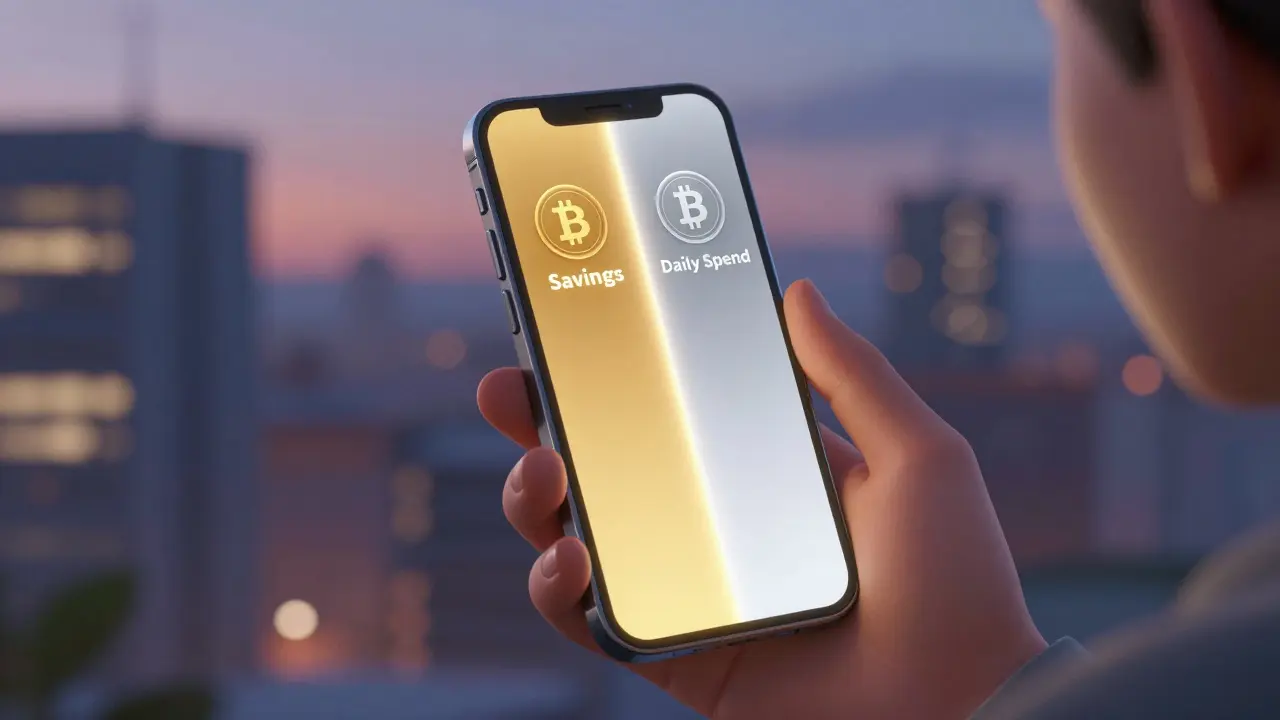
The future isn't zero-sum. It's hybrid. You might receive your salary in a US Digital Dollar, spend it at a grocery store, and park your long-term savings in Bitcoin. The key is understanding the trade-offs. CBDCs give you convenience and legal certainty. Private crypto gives you autonomy and borderless freedom. Both have a place in your digital wallet, but knowing when to use which is the skill of the decade.
Will CBDCs replace Bitcoin and other private cryptocurrencies?
It is unlikely that CBDCs will completely replace private cryptocurrencies. CBDCs are designed for stability, legal compliance, and integration with national economies, making them ideal for daily transactions and official payments. Private cryptocurrencies like Bitcoin offer decentralization, censorship resistance, and speculative investment opportunities that CBDCs cannot provide. Most experts predict a coexistence model where each serves different user needs.
Are CBDCs safe from hacking compared to crypto exchanges?
CBDCs aim to provide higher security through government-backed infrastructure, but they introduce different risks. While private crypto exchanges are frequent targets for hackers, a successful attack on a central bank's CBDC system could have catastrophic national economic consequences. The IMF notes that CBDC ecosystems are complex and require robust cyber resilience strategies to manage these amplified risks.
How do CBDCs affect privacy compared to cash or private crypto?
CBDCs generally offer less privacy than physical cash and vary compared to private crypto. Since central banks issue CBDCs, they have the potential to track transaction histories for anti-money laundering (AML) purposes. To address privacy concerns, many proposed designs include anonymity tiers or holding limits, but users should expect less anonymity than with decentralized cryptocurrencies where users control their own data.
What is the current status of CBDC launches worldwide?
As of 2025, 134 countries representing 98% of global GDP are exploring or developing CBDCs. While many are in pilot phases, actual retail deployments are limited. Countries like the Bahamas, Nigeria, Jamaica, and Zimbabwe have launched CBDCs, with conflicting reports suggesting up to 11 nations may have active systems. Major economies like the US and EU are still in advanced research and consultation stages.
Can CBDCs be used for cross-border payments faster than SWIFT?
Yes, CBDCs are specifically designed to improve cross-border payment efficiency. Initiatives like mBridge allow for near-instant settlement between participating countries, bypassing the multi-day delays and high fees of traditional SWIFT networks. In 2025, $59 billion in cross-border transactions were processed via CBDCs, demonstrating significant progress in this area.

Autumn Story
July 6, 2026 AT 04:51Oh my gosh, this is such a fascinating read!!! I really think we should all be excited about the possibilities of digital money evolving! It feels like we are standing on the brink of a new era where everyone can participate in the financial system more easily. The idea of instant payments without banks taking huge cuts is just beautiful to me. Let's keep an open mind and see how this unfolds together! 🌟
Hazel Fruitman
July 7, 2026 AT 12:09typical government overreach disguised as 'innovation'. they want total control over every penny you spend. its morally bankrupt to even consider letting them track your purchases under the guise of fighting crime. people deserve privacy not surveillance.
Eric Braddock
July 8, 2026 AT 00:57You're missing the deeper implications here. This isn't just about money; it's about social credit systems being implemented slowly so nobody notices until it's too late. The IMF and central banks are coordinating a global ledger that will allow them to freeze assets based on political dissent. Wake up sheeple. The programmable nature of CBDCs means they can expire or restrict usage for 'unapproved' items. It's the end of economic freedom.
Ella Collinson
July 9, 2026 AT 15:18The structural integrity of fractional reserve banking is fundamentally compromised by the introduction of risk-free sovereign liabilities accessible via mobile interfaces. The liquidity drain potential during systemic shocks creates a negative feedback loop wherein commercial bank solvency is inversely correlated with CBDC adoption rates. Furthermore, the interoperability protocols like mBridge represent a hegemonic consolidation of monetary policy leverage among G20 nations, effectively marginalizing non-aligned jurisdictions from the swift-value transfer ecosystem. It is a technocratic power grab masquerading as efficiency optimization.
Andrew Schneider
July 10, 2026 AT 05:31Boring! 😴 You guys are acting like this is some big conspiracy when it's just tech. Look, if I can buy coffee with Bitcoin tomorrow without waiting 3 days for confirmation, I'll take it. But yeah, the gov wants a piece of the pie because they love control. 🍕👀 But let's be real, most people won't care unless their wallet gets frozen. Then everyone will panic. Drama queen alert! 🎭💥
Ray Arney
July 11, 2026 AT 16:03I guess it makes sense to have both options. I don't know much about crypto but it seems complicated. A digital dollar sounds safer for everyday stuff.
Mark Tuason
July 12, 2026 AT 13:03It is important to consider the regulatory frameworks that will govern these transactions. While decentralization offers certain freedoms, the stability provided by central bank backing ensures that consumers are protected against volatility and fraud. We must balance innovation with security.
Nick G
July 14, 2026 AT 10:39In many cultures around the world, trust in institutions varies significantly, and this technological shift may bridge or widen those gaps depending on implementation. For instance, in regions with unstable fiat currencies, a stable digital currency could provide immense relief to ordinary citizens who struggle with hyperinflation, whereas in developed nations, the primary concern remains privacy and autonomy. It is crucial that we approach this transition with empathy for those who have been excluded from traditional banking systems, ensuring that digital inclusion does not come at the cost of civil liberties. Perhaps there is a middle ground where anonymity tiers protect individual rights while still allowing for necessary oversight to prevent illicit activities.
Nick Wengel
July 15, 2026 AT 00:38Good point. Different countries have different needs. Some might prefer the safety of CBDCs while others stick to crypto. It's interesting to see how it plays out globally.
Natalie Lucas
July 15, 2026 AT 03:18i mean its kinda cool tho. imagine paying for stuff instantly everywhere. no more waiting for transfers. vibes are good if we use it right!
Steven Briggs
July 16, 2026 AT 01:07just watch your keys
Kim Kay
July 16, 2026 AT 10:31I think we need to educate ourselves more about how these systems work before jumping to conclusions. It can be overwhelming but understanding the basics helps us make better decisions for our finances. Lets support each other in learning this new landscape together.